

The Pod Reads Like a Flower Before It Reads Like a Spice
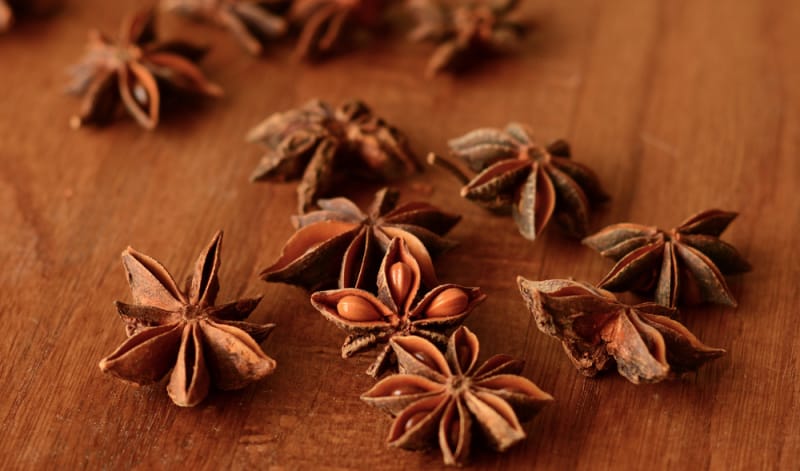
Pick up a good star anise and the first thing you notice is structure. Eight woody carpels radiate from a single center, each one splitting open at the tip, and inside each carpel sits a glossy brown seed. That is the whole anatomy of the trade: carpels, seeds, and the oil held between them.
Break one and the smell arrives before you are ready for it. Sweet licorice first, then a warm woody note, then a faint trace of something sharper, closer to clove than to fennel. Chew a seed and the taste spreads slowly across the tongue, sweet at the front, a little numbing at the back.
One Province Carries Most of the World Supply
Illicium verum is a fussy tree. It wants heat, humidity and a slope that drains, which is why the commercial belt sits in southern Guangxi and northern Vietnam rather than anywhere a buyer might prefer. Guangxi's own agriculture department counted six million mu under anise in 2023, against one million in Yunnan and roughly sixty thousand in Guangdong.
| Region and source | Planting area | Output or value |
|---|---|---|
| Guangxi (Agriculture Dept., 2023) | 6,000,000 mu | 60,000–150,000 t dried fruit yearly; RMB 4–8 B; 80–90% of national output |
| Yunnan (Agriculture Dept., 2023) | 1,000,000 mu | — |
| Guangdong (Agriculture Dept., 2023) | 60,000 mu | — |
| Guangxi share of national crop (Forestry Administration, 2025) | — | Above 85% |
| Gulong, Teng County (Guangxi Daily, 2021) | — | 11% of Guangxi output; over RMB 1 B yearly; top three anise market in the province |
| Fangchenggang side (Industry Dept., 2025) | Anise and cassia combined above 1.25 M mu | 2024 anise crop 7,304 t, worth RMB 438 M; spice exports 6,500 t in H1 2025 |
Sources: Guangxi Department of Agriculture and Rural Affairs (2023); National Forestry and Grassland Administration (Sep 2025); Guangxi Daily (Jul 2021); Guangxi Department of Industry and Information Technology (2025).
Read those numbers as a buyer and one conclusion follows: your anise risk is a Guangxi weather risk. A late spring cold snap or a wet harvest moves the whole market, not a corner of it.
Drying and Grading Set the Price Before Anyone Argues About It
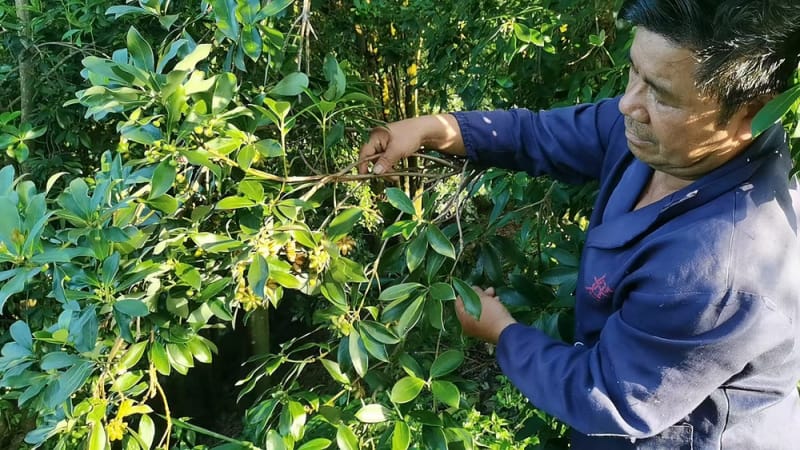
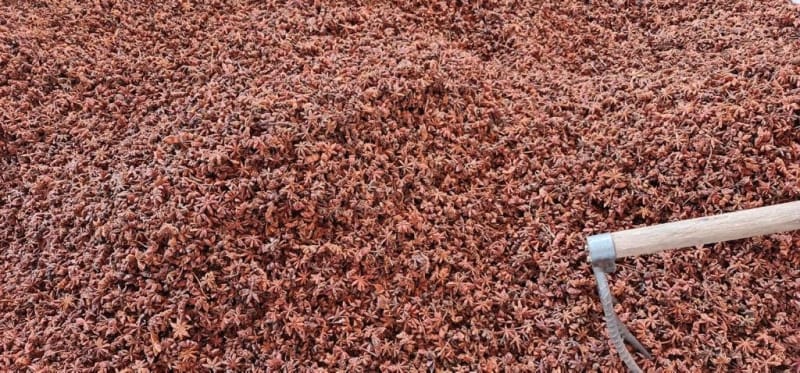
Fruit comes off the tree green and slightly soft, usually from the spring and autumn crops. It is spread thin and turned until the carpels stiffen and darken, and the difference between a careful yard and a rushed one shows up three months later in a container.
Then comes grading, which in the anise trade is mostly a counting exercise. Whole pods are sorted by how many fit into 500 grams; bigger pods mean fewer pieces per weight, thicker carpels and usually more oil. Broken pieces, seeds and stems are separated out because a blend buyer cannot use them and a pharma buyer will not pay for them.
Where the Flavor Actually Lands
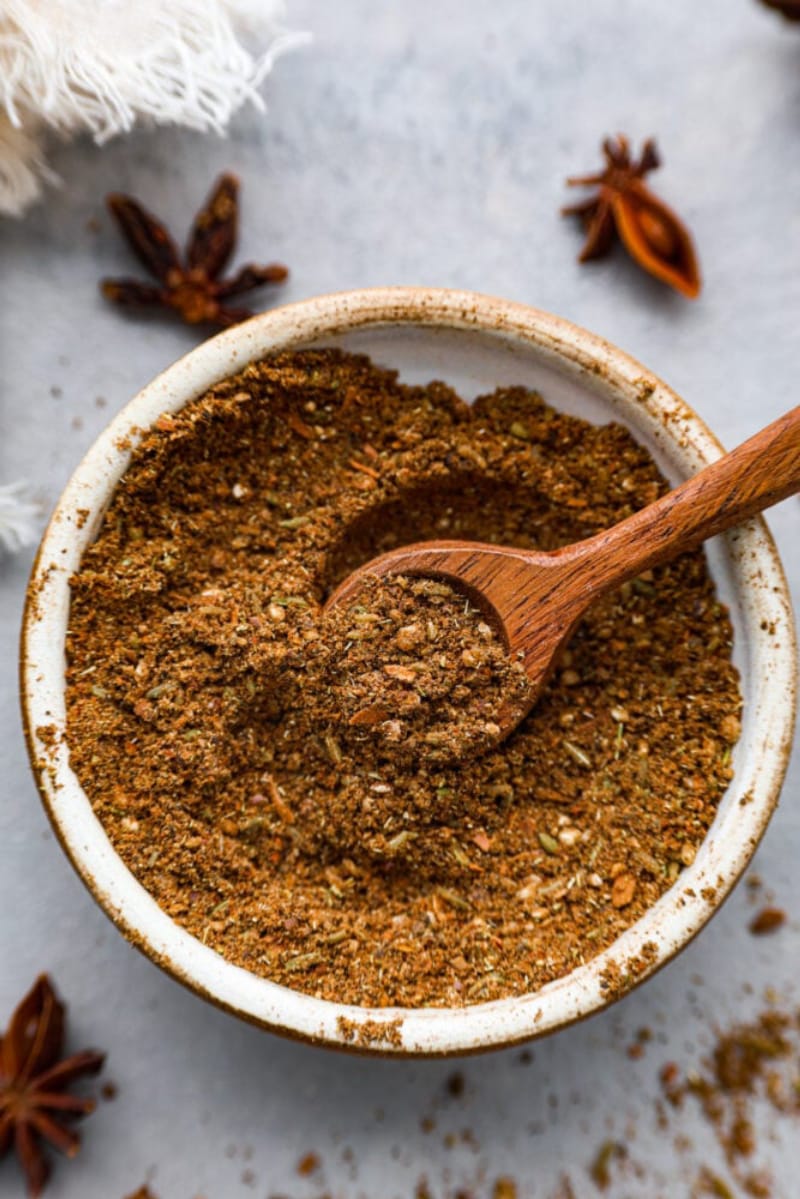
Whole pods go into braising liquids, where they hold their shape for hours and release sweetness slowly. Grind them and the same sweetness turns aggressive, which is why blend houses add star anise late in the formula rather than at the base.
Five spice is the obvious destination, and the one most buyers already know. The less obvious one is confectionery and liqueur work, where a small amount of ground anise rounds off a heavy sugar profile. In Middle Eastern and Latin American seasoning lines it shows up as a background note in rubs, doing the job that fennel does in other formulas.
The Market Numbers Behind the Pod
Market research on star anise is thinner than on pepper or cinnamon, and the houses that do cover it disagree on scope. One counts the whole spice trade, another the organic segment, a third the extraction side. Put the published figures side by side and the direction is clear even where the absolute numbers are not.
| Report | Base | Forecast | Growth |
|---|---|---|---|
| Research and Markets | USD 1.2 B (2026) | USD 1.8 B (2033) | 5.90% CAGR |
| PW Consulting | Not stated | USD 721.99 M (2032) | 4.8% CAGR, 2025–2032 |
| Verified Market Reports | Not stated | Above USD 2.1 B (2030) | About 7.2% CAGR |
| Alibaba B2B Guide | USD 116.3 M (2025) | USD 217 M (2034) | 7.1% CAGR |
Figures as published by each source, 2025–2026. Definitions differ: the Alibaba figure covers organic anise only.
My own reading is that the spread tells you more about methodology than about demand. A buyer planning a two-year contract should use the low end for volume assumptions and the high end only for category growth arguments.
Yulin Fuda Is Where the Volume Meets the Buyer
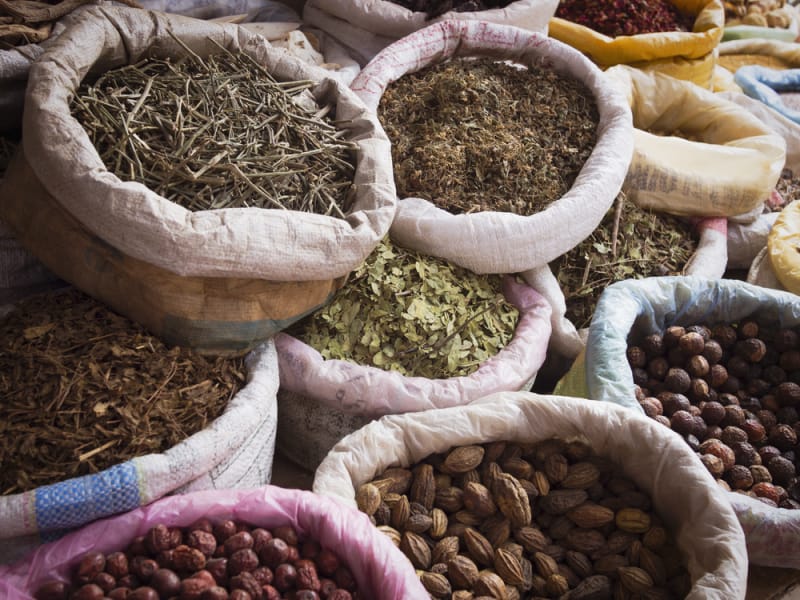
Anise grown across a province does not ship from a province. It ships from a market, and for this catalog that market is Yulin Fuda International Spice Logistics Port. The hub carries more than 160 spice varieties and over 700 merchants, closed 2025 at RMB 33.5 billion in transactions, and is credited by state media with roughly 80 percent of China's domestically traded spices and more than two thirds of the world's circulating spice volume.
What that gives a buyer is comparison. Several Guangxi harvests land in the same market in the same week, get weighed, smelled and graded side by side, and the lot that leaves is the one that survived that comparison.
The Second Buyer Nobody Talks About
Star anise is one of the few spices with a pharmaceutical customer. Its shikimic acid is a starting material in antiviral drug production, and the same fruit distilled gives anise oil, mostly trans-anethole, sold into flavor and fragrance compounding.
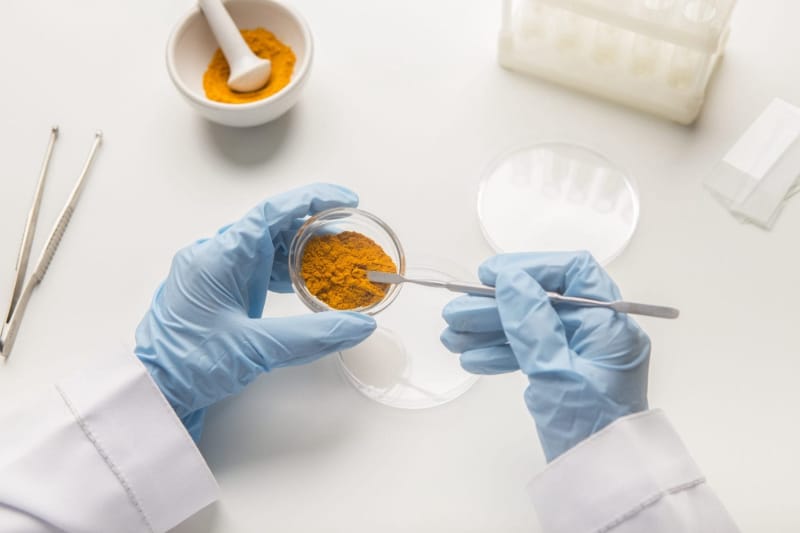
That has a practical consequence at the loading dock: food buyers grade on appearance and aroma, extraction buyers grade on oil content and consistency. A lot that looks perfect can still fail an oil-yield test, and a lot with slightly uneven color can be the better extraction raw material. Ask which test your supplier runs before you compare price.
What to Ask Before You Book the Container
Six questions cover most of the risk. Size count per 500 grams, moisture ceiling, broken and foreign matter limits, oil content if the lot is destined for extraction, packing format, and the port of loading. Get the answers in writing against a sample, not in a chat message.
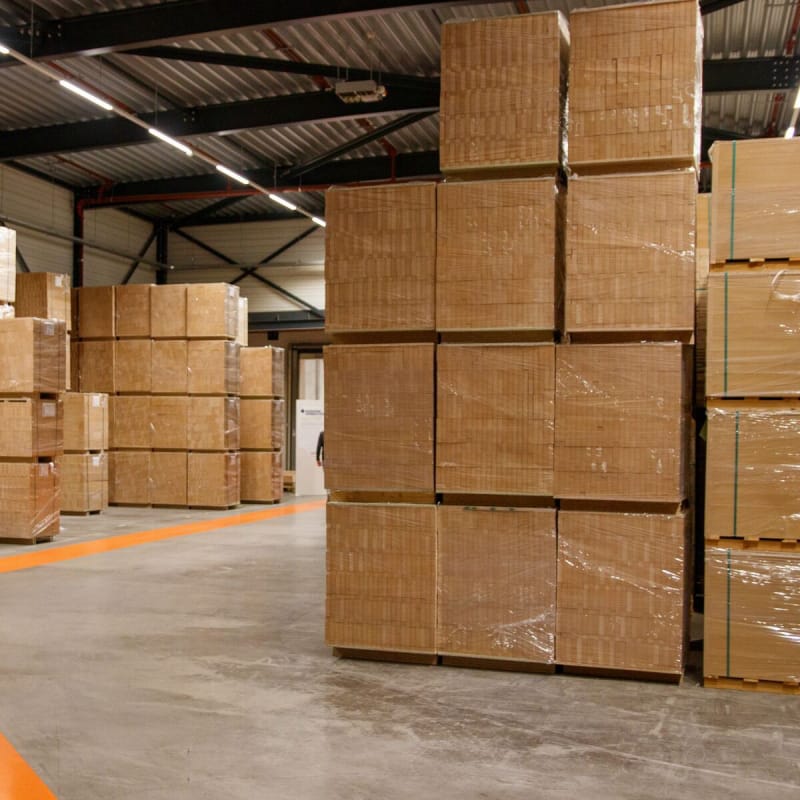
On packing, whole anise travels in double-lined jute or cartons, ten to twenty-five kilos, palletized for a forty-foot high cube. Moisture is the enemy on a long crossing, so a sealed liner matters more than the outer bag. spicesmfr grades, consolidates at Yulin Fuda and handles export documents from one desk, which is the practical reason to buy through a hub rather than a single farm.
Ask for a Graded Sample With the Numbers Attached
Send your target size count, moisture ceiling and packing format. We will come back with a current-season lot, a size and moisture report, and an oil-yield figure if the cargo is heading to extraction.
Leave a Comment