

The Berry That Tingles
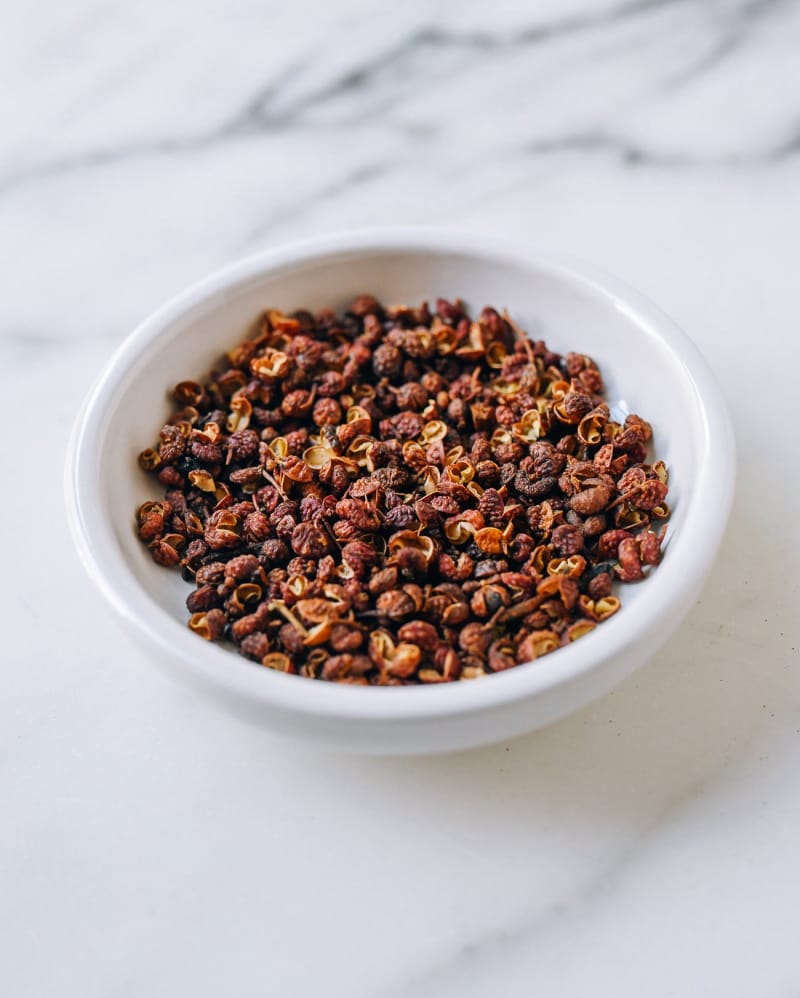
Sichuan pepper is the dried husk of Zanthoxylum bungeanum, a prickly ash tree in the citrus family. The tiny reddish-brown spheres are not true peppercorns: their magic comes from hydroxy-alpha-sanshool, a compound that triggers a gentle, vibrating numbness on the tongue rather than straight heat.
That tingling profile is exactly what food and beverage brands chase today, from instant noodles and snack seasonings to craft beer and cocktails. When a brief asks for "mala," Sichuan pepper is the non-negotiable anchor ingredient.
Where China Grows It
Production clusters in China's southwest and northwest. A 2026 academic review reports that annual Chinese output of Zanthoxylum bungeanum exceeds 450,000 tonnes, supporting a market value of roughly USD 18 billion; a perfumery industry glossary cites more than 500,000 tonnes a year from Sichuan, Shaanxi and Yunnan. Dried peppercorn output alone stood at about 458,500 tonnes in 2018 per China Forestry Yearbook figures.
Buyers should know that "Sichuan pepper" is a category, not one origin: red pepper from Sichuan and Gansu leads on aroma, while Shaanxi and Chongqing supply large commercial volumes. A single region rarely covers every spec, which is why sourcing through a trading hub pays off.
| Production indicator | Figure | Source |
|---|---|---|
| China annual output, Z. bungeanum | > 450,000 t (market ~ USD 18B) | SCIRP review, 2026 |
| China annual huajiao output | > 500,000 t | Première Peau glossary |
| Dried peppercorn output, 2018 | ~ 458,500 t | China Forestry Yearbook |
| Main producing provinces | Sichuan, Gansu, Shaanxi, Yunnan, Chongqing | Industry references |
Picked by Hand in the Summer Sun
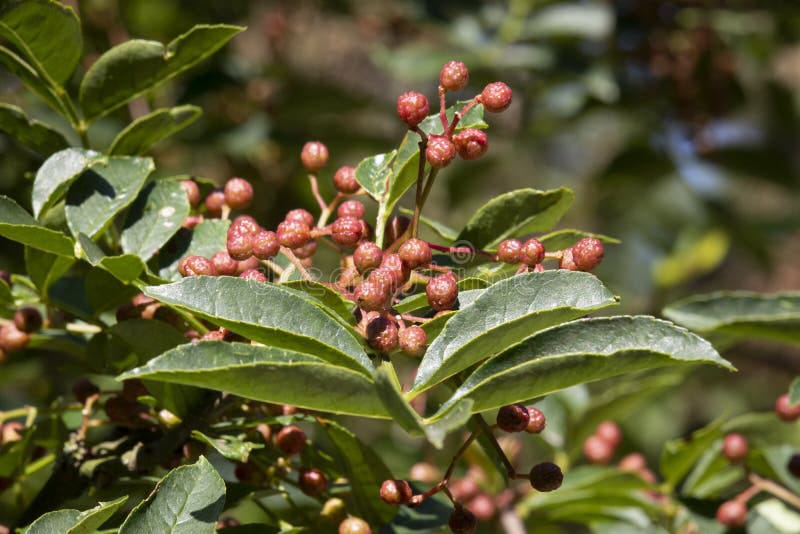
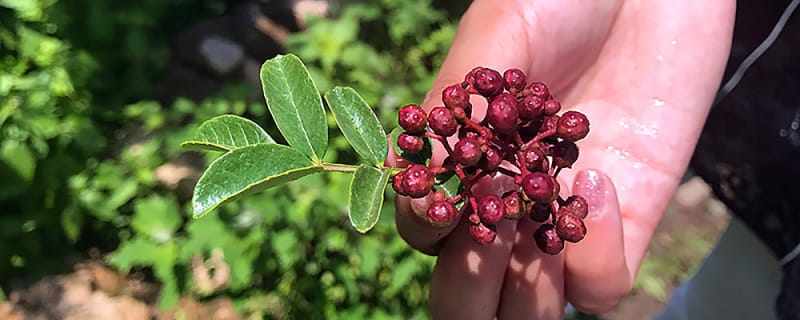
Harvest starts in late summer, when the berries turn from green to deep red but before they fully open. The trees are thorny and the fruit clusters hang high, so pickers work by hand, snapping off whole sprays and lowering them in baskets. Nothing about this crop is machine-harvested at scale.
Fresh-picked pepper carries a sharp, citrusy aroma with a resinous edge, and the scent intensifies as the husks dry in the sun over the following days. That drying window decides color and oil retention, and careful yards control it batch by batch.
Red and Green, Two Different Crops
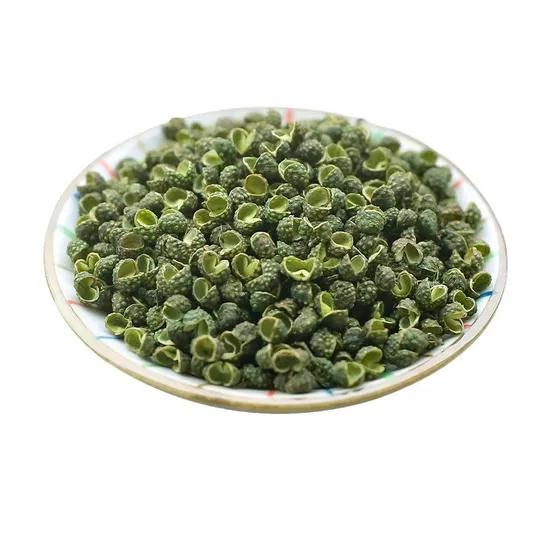
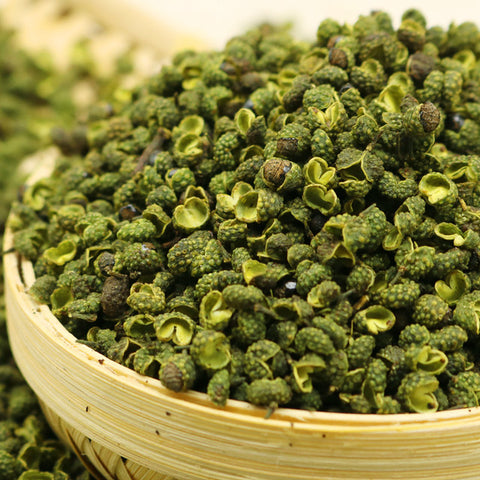
Buyers often assume color is cosmetic, but red and green Sichuan pepper are different products. Red pepper dries into the classic husk, warm and aromatic, the workhorse for braises and spice blends. Green pepper is picked younger, keeps its color after drying, and delivers a stronger, more immediate numbing punch with a brighter aroma.
Green pepper is also traded frozen in some programs to lock in freshness, alongside dried green husks. Knowing which profile your formula needs is the first filter in any sourcing conversation, because substitution changes the finished product more than most clients expect.
Yulin Fuda Moves the Trade
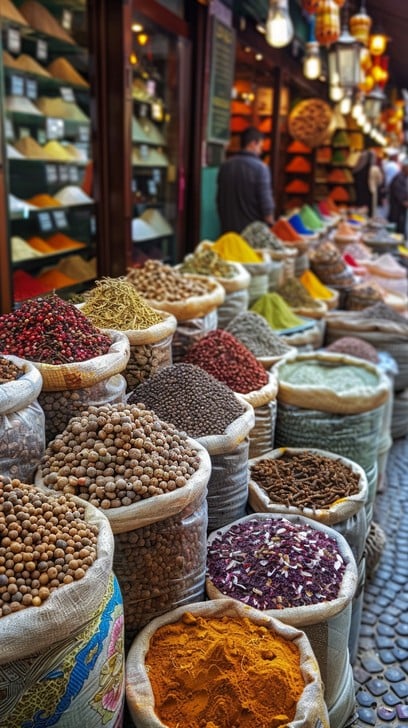
Once dried, most of China's spice harvest flows to Yulin Fuda International Spice Logistics Port in Guangxi. The market trades more than 160 spice varieties, hosts over 700 merchants, and recorded RMB 33.5 billion in transactions in 2025, a third straight year above RMB 30 billion.
Chinese state media reports that around 80% of the country's traded spices and more than two-thirds of the world's circulating spices pass through Yulin. For overseas buyers, that concentration means one market visit covers grade comparison, lot inspection and container consolidation for Sichuan pepper and everything around it.
The Signature of Sichuan Cooking
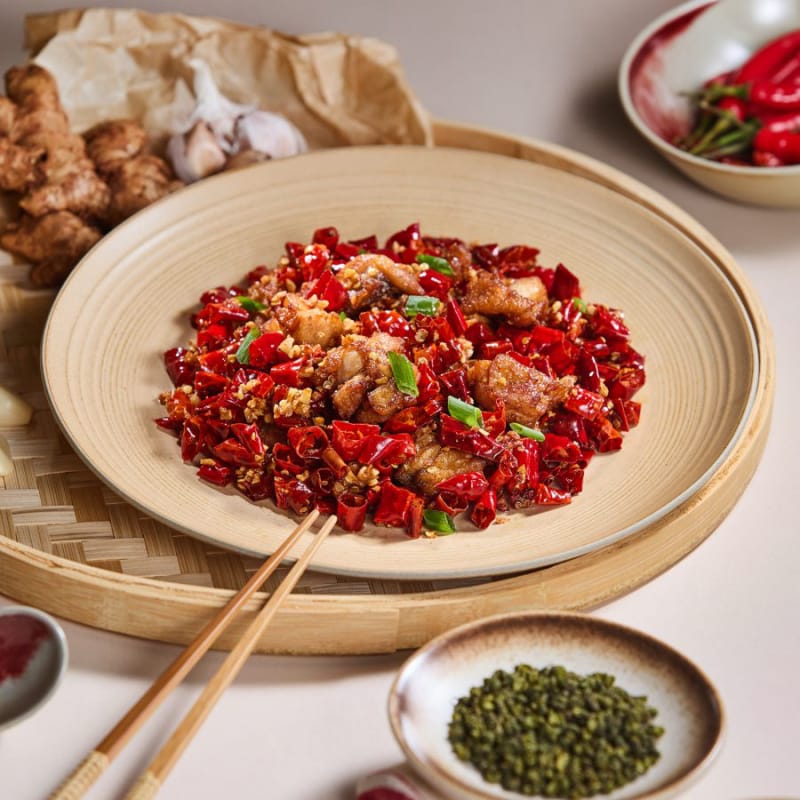
No regional cuisine leans on one spice the way Sichuan cooking leans on huajiao. It appears in mapo tofu, kung pao chicken, dry-fried green beans and the iconic la zi ji, where piles of dried chilies meet scattered peppercorns. The numbing heat is a cultural habit as much as a flavor: Sichuan diners expect the tingle, and chefs build dishes around it.
Eat a well-made mapo tofu and the pepper works slowly, a low electric hum across the lips that lingers after the chili heat fades. That sequence is the sensory signature restaurants and packaged-food brands are trying to replicate at scale.
Braising, Marinades and Soup Broths
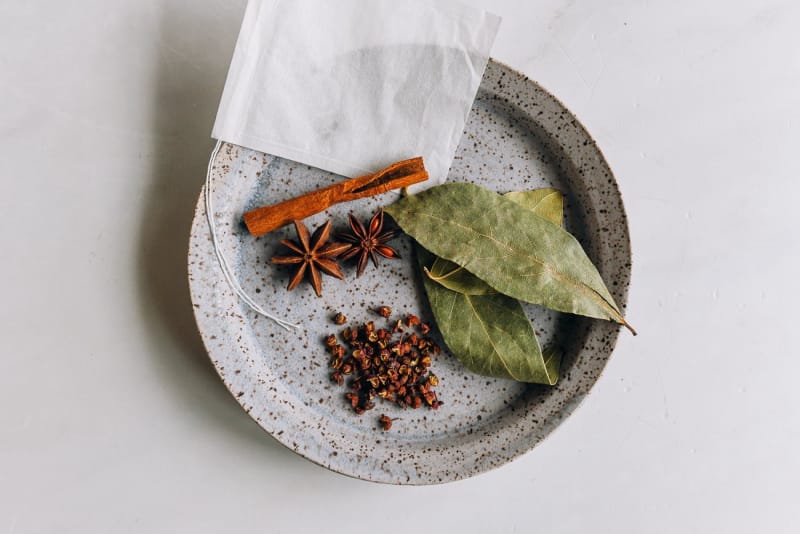
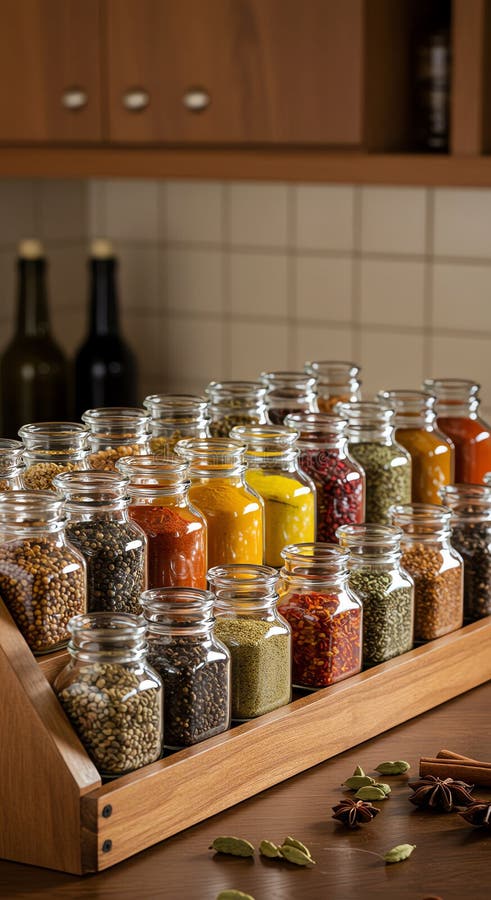
Beyond the famous dishes, Sichuan pepper is a quiet workhorse of the Chinese braising tradition. It goes into five-spice powder and master-stock sachets alongside star anise, cinnamon and bay leaves, where it adds depth without turning a broth bitter. Home cooks tie whole husks into cheesecloth; food producers buy pre-blended sachets by the thousand.
For processed foods, whole husks keep their aroma through long simmering, while ground pepper releases flavor in minutes. That distinction drives two different SKUs, and most braising programs order both.
Sichuan Pepper Oil at Home and at Scale
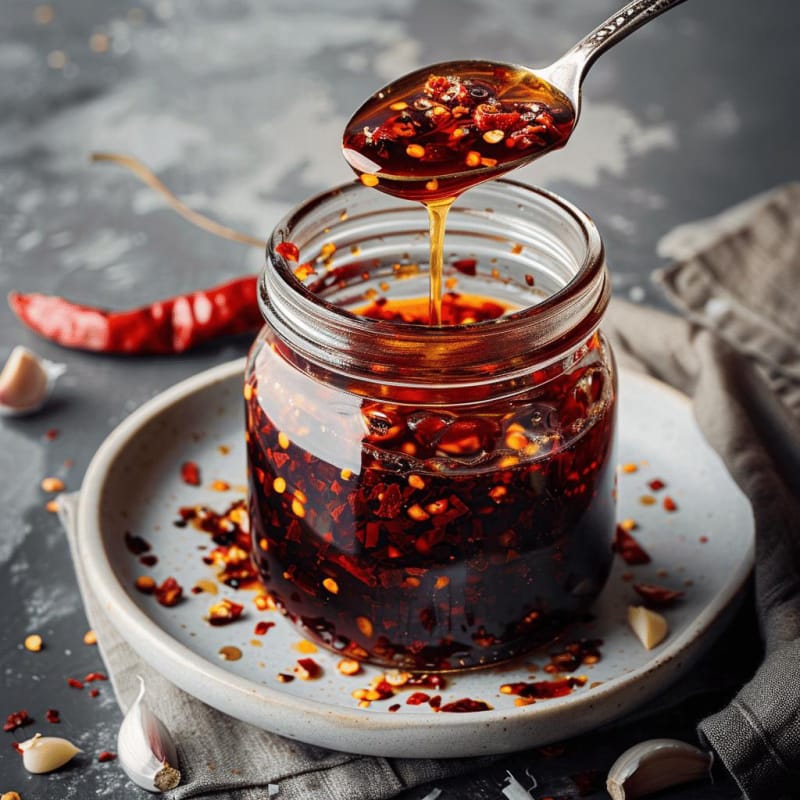
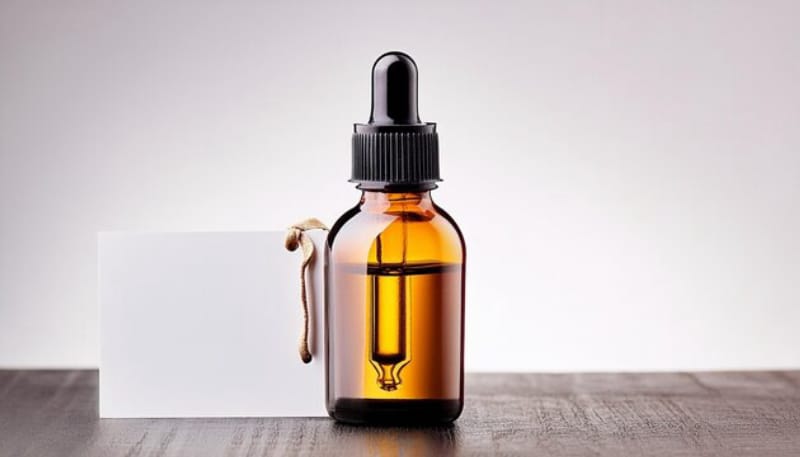
Sichuan pepper oil, and its greener cousin teng jiao oil, is made by infusing or distilling pepper into oil, and it is the fastest-growing format in export trade. Chefs drizzle it over noodles and cold dishes; snack manufacturers use it in marinades and seasoning oils where whole husks would be impractical.
Open a jar and the scent is unmistakable: citrus, pine and a warm, numbing spice that coats the nose before the oil ever reaches the mouth. Because the oil is shelf-stable and easy to dose, it is often the first Sichuan pepper product a Western manufacturer adopts.
Oil, Oleoresin and the Downstream Market
Downstream processing is where value compounds. Market Intelo sizes the Sichuan pepper oil market at USD 0.4 billion in 2025, heading to USD 0.7 billion by 2034 at a 6.8% CAGR, with the oleoresin segment moving from USD 0.3 billion to USD 0.5 billion at 6.2%. Meanwhile, more than 90% of the pericarp is still sold whole or in bulk, which means most of the crop's future value sits in further processing.
For a buyer, that split is an opportunity: locking whole-husk volume today positions you ahead of the processing wave, and a single supplier can step you from raw material into oil and oleoresin later without switching sourcing chains.
Market forecasts, USD billion. Data: Market Intelo (2025).
Share of pericarp still marketed whole or in bulk. Data: SCIRP review, 2026.
| Segment | 2025 | 2034 | Source |
|---|---|---|---|
| Sichuan pepper oil | USD 0.4B | USD 0.7B (6.8% CAGR) | Market Intelo |
| Sichuan pepper oleoresin | USD 0.3B | USD 0.5B (6.2% CAGR) | Market Intelo |
The Forms Buyers Actually Order
Export programs run on four formats: whole red husks for braising and display, whole green husks for fresh-numbing programs, ground powder in mesh specs such as 20-40 for seasoning blends, and oil or oleoresin for industrial dosing. Green pepper also ships frozen in some markets to preserve its bite.
From our side of the trade, the honest observation is that buyers who start with whole husks and let their R&D team test powders and oils later tend to lock supply more cheaply. The raw material is the volatile asset; the processed forms are the reliable margin.
Stock, Packing and Ports
Whole husks pack in 10 kg kraft bags with food-grade liners or 20 kg woven sacks, palletized into 20- and 40-foot containers. Because the volatile oils fade with heat and light, warehouse stock rotates by harvest year and stays in cool, dark zones. Frozen green pepper ships in reefer containers with strict temperature records.
Lead times follow the season: new-crop red pepper lands after the summer harvest, while stored inventory covers year-round demand. Placing quarterly allocations early lets suppliers hold better-grade lots for you instead of selling whatever remains.

Buying Sichuan Pepper That Hits the Mark
Start with samples and a clear target profile. Tell spicesmfr your color (red or green), form (whole, ground, oil), and numbing-strength preference, and we will ship samples with certificates of analysis covering moisture, volatile oil content, sulfur and impurities. Once approved, we hold allocation, blend to your spec and pack to your retail or foodservice format.
After years of handling this crop, our view is simple: numbing is a slow flavor that punishes shortcuts. A little patience in sampling pays back in consistency on every later container, and that is the standard we hold our own supply to.
Request Samples and Spec Sheets
Red and green peppercorns, powder, oil and oleoresin with COA and traceability docs. Tell us your target color, form and volume, and we will respond with samples and a landed-cost estimate.
Leave a Comment