

A Quiet Fruit Behind the Sweetener Boom
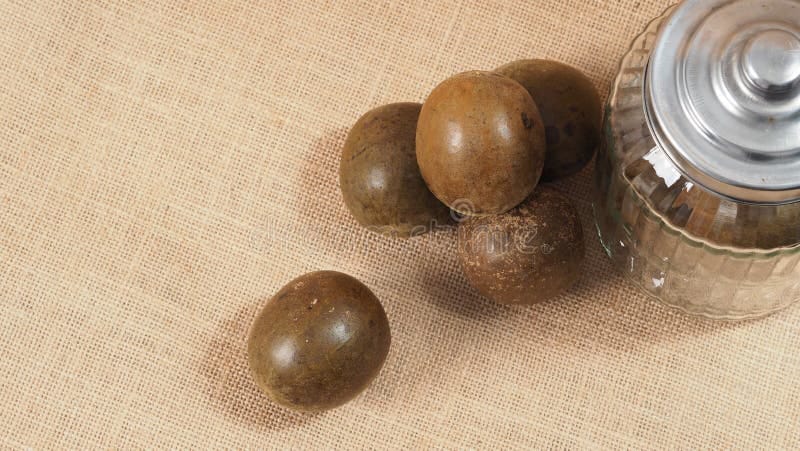
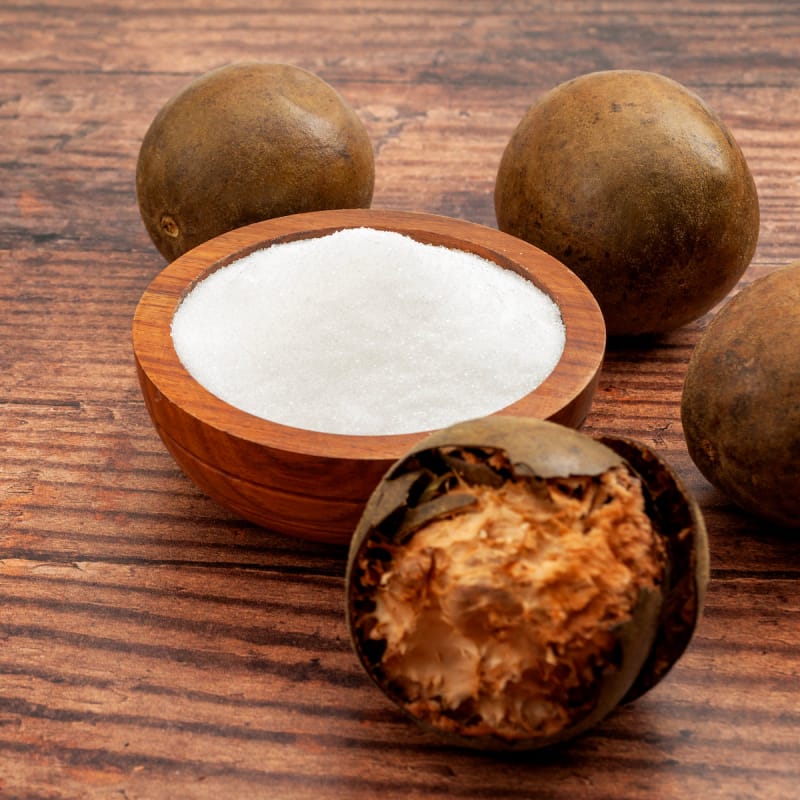
Most buyers first meet monk fruit on a nutrition label, not in a produce crate. The raw material is a small, round, brown-skinned gourd from the vine Siraitia grosvenorii, dried until the shell rings hollow. What makes it commercially valuable is the mogroside family inside the flesh, compounds that taste sweet yet carry almost no calories or glycemic load.
In our own export work we have noticed the same pattern every season: a food brand starts with one trial container of extract, then comes back asking about whole fruit for tea programs and slices for beverage lines. The product moves from specialty to standard faster than almost any botanical we carry.
One County Grows Half the World's Supply
Yongfu County in Guangxi is the heart of production. According to the Guilin municipal government and Yongfu's 2026 government work report, the county plants 142,000 mu of monk fruit and harvests about 1.5 billion fresh fruits a year, the largest output of any county in China. Processing capacity has passed 5 billion fruits, and the full industry chain now exceeds 10 billion yuan in annual value, with a stated target of 30 billion by the end of the 15th Five-Year Plan.
One widely cited line from the county government captures the scale: roughly one of every two monk fruits traded in the world comes from Yongfu. For a B2B buyer, that concentration means supply is deep, quality is standardized, and seasonal shortages are rare.
| Yongfu production indicator | Figure | Source |
|---|---|---|
| Planting area | 142,000 mu (national No.1) | Guilin gov., 2026-09-30 |
| Annual fresh fruit output | > 1.5 billion fruits | Yongfu work report 2026 |
| Annual processing capacity | > 5 billion fruits | Yongfu work report 2026 |
| Full industry chain value | > RMB 10 billion | Guilin gov., 2026-09-30 |
| Share of world output | ~ 1 of every 2 fruits | Yongfu county gov. |
Share of world monk fruit output attributed to Yongfu County. Data: Yongfu County Government, 2026.
Vines, Hillsides, and an Eight-Month Season
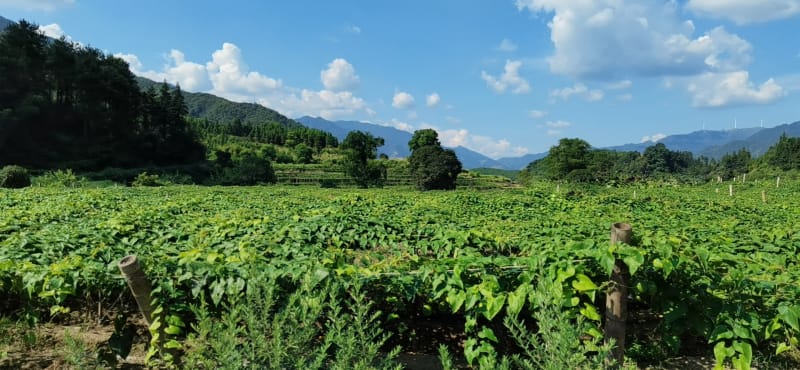
Monk fruit is a subtropical vine, not a tree. Farmers plant it on hillside trellises at moderate elevation, where warm days, misty nights and good drainage keep the fruit disease-free. Vines are set out in spring and the harvest runs through late autumn, giving a single long season that fills processing plants for months.
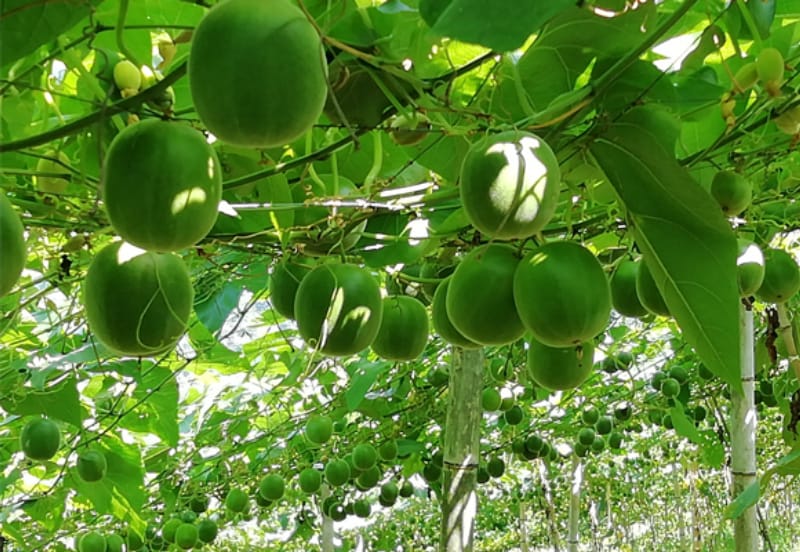
The fruit grows in clusters under broad leaves, and growers still do much of the pollinating and thinning by hand. That labor intensity is one reason contracted orchards and fixed farm partnerships matter: they keep supply steady and grade consistency high, which is exactly what a wholesale contract needs.
Hand-Picked at Peak Sweetness
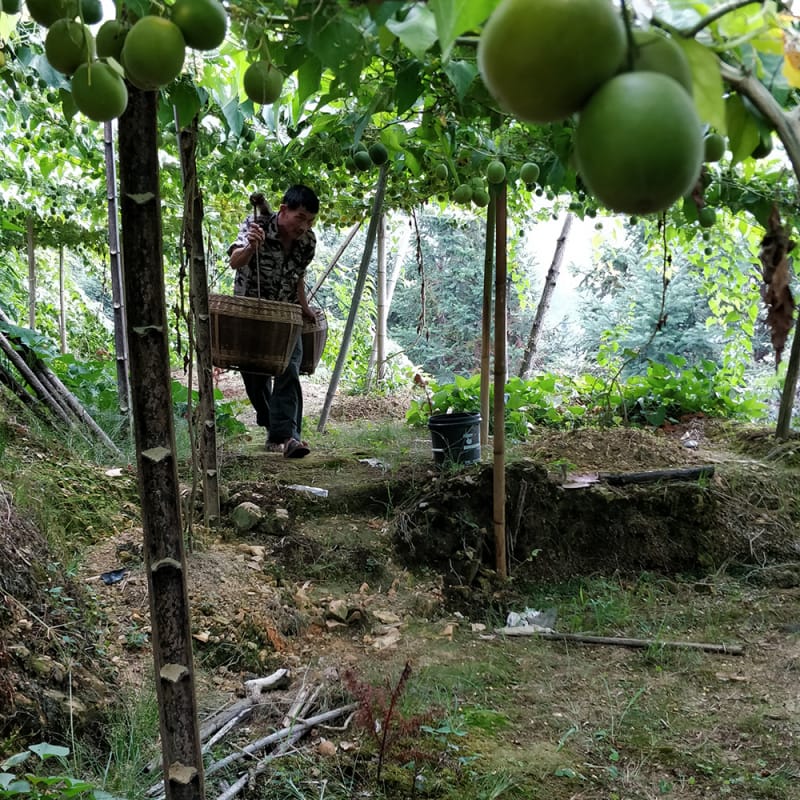
Harvest timing decides the grade. Fruit is picked when the skin turns from green to a pale yellowish tone, then carried off the hillside in shoulder baskets the same day. Fresh fruit goes straight to drying yards or processing lines, because monk fruit left too long starts to ferment and loses the clean sweetness buyers expect.
On our sourcing trips we have watched crews carry loaded bamboo baskets down narrow field paths in the late afternoon. It is old-fashioned, careful work, and it is precisely why the dried product keeps its caramel note and intact shape from field to container.
Dried, Sliced, or Whole: Choosing the Form
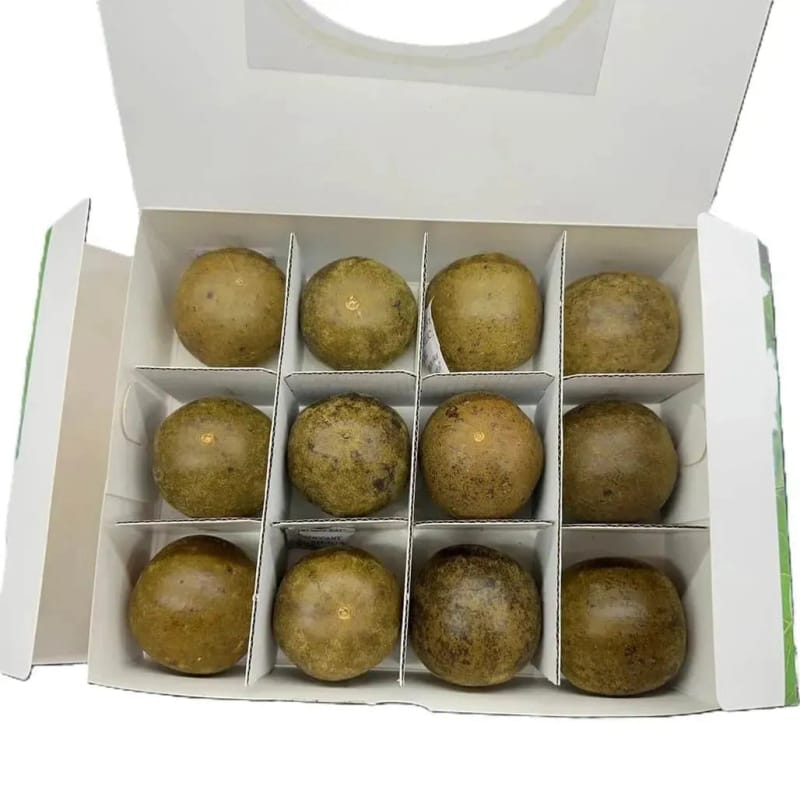
Once dried, monk fruit splits into distinct commercial forms. Whole fruit keeps the shell intact for tea brewing and retail displays. Sliced or "flesh" cuts speed up extraction and are favored by tea bag and beverage lines. Powder and extract grades serve the sweetener market, where the mogroside content is the spec that matters.
Guangxi's agriculture department counts 166 processing enterprises and cooperatives in the monk fruit chain, developing more than 120 products from sweetener to herbal tea and medicinal preparations. That processing depth means a buyer can source whole fruit today and move up the value chain with the same supplier tomorrow.
What's Inside: Flesh, Seeds, and Grades
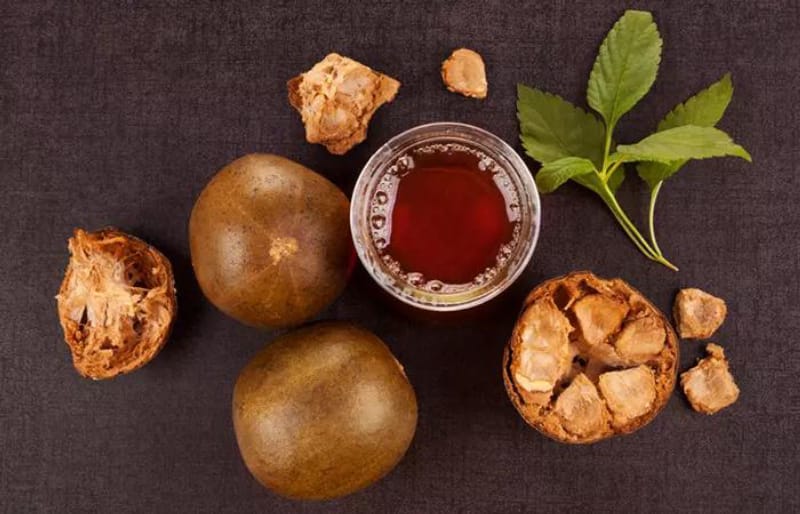
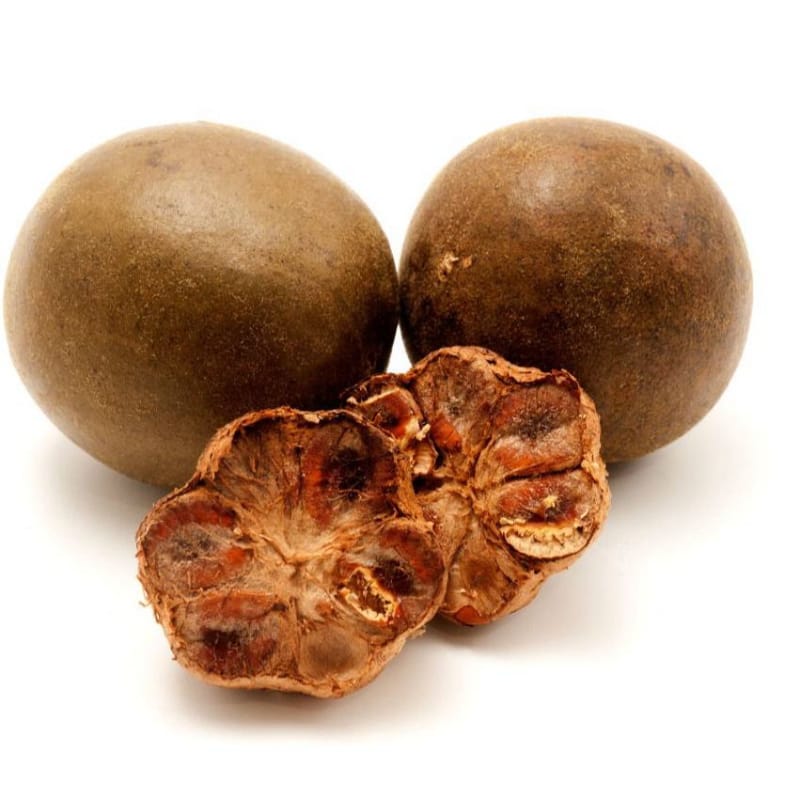
Crack a dried monk fruit and you find a thin brittle shell, a light fibrous pulp, and a cluster of flat seeds. The pulp carries the mogrosides, so slicing and extraction are engineered around getting the maximum yield from that inner flesh without dragging in shell or seed bitterness.
Export grades are usually sorted by size, dryness, shell integrity and color. Fruits with an even tan-brown shell, a hollow ring when tapped, and no mold or soft spots command the best prices. We grade on the same bench each season so that a 20-foot container of "large grade" means the same thing in January as it does in August.
Yulin Fuda: The Hub Behind Two-Thirds of Global Trade
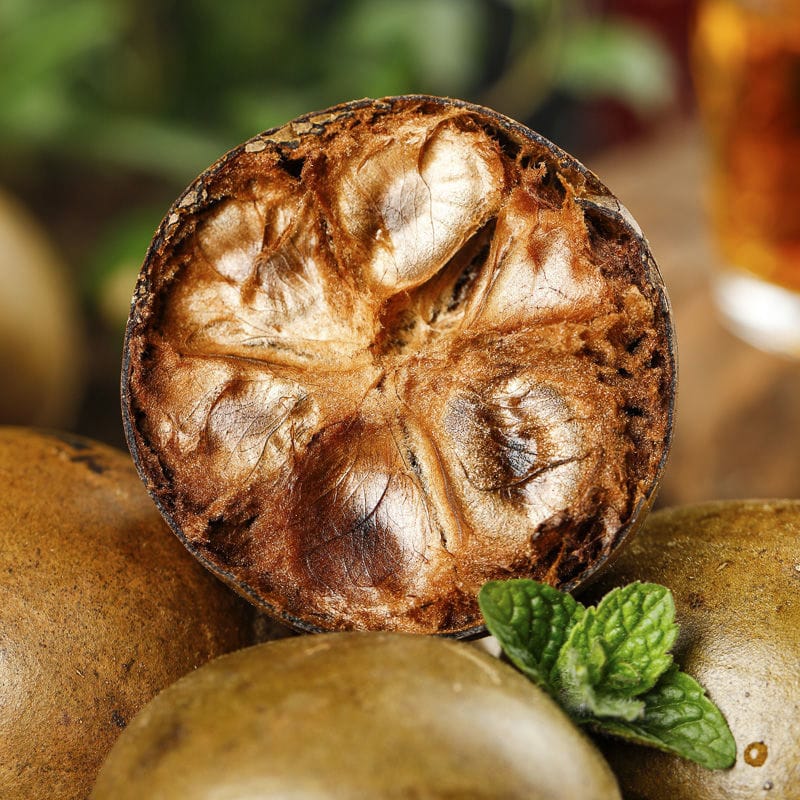
Dried monk fruit from Yongfu and neighboring counties flows into Yulin Fuda International Spice Logistics Port in Guangxi, the trading center for China's spice trade. The market carries more than 160 spice varieties, houses over 700 merchants, and recorded RMB 33.5 billion in transactions in 2025, its third straight year above RMB 30 billion.
Official Chinese media coverage states that about 80% of China's traded spices and more than two-thirds of the world's circulating spices pass through Yulin. For overseas buyers, sourcing through a market of this scale is a one-stop path to comparison, inspection and consolidated loading.
From Herbal Tea to Clean-Label Beverages
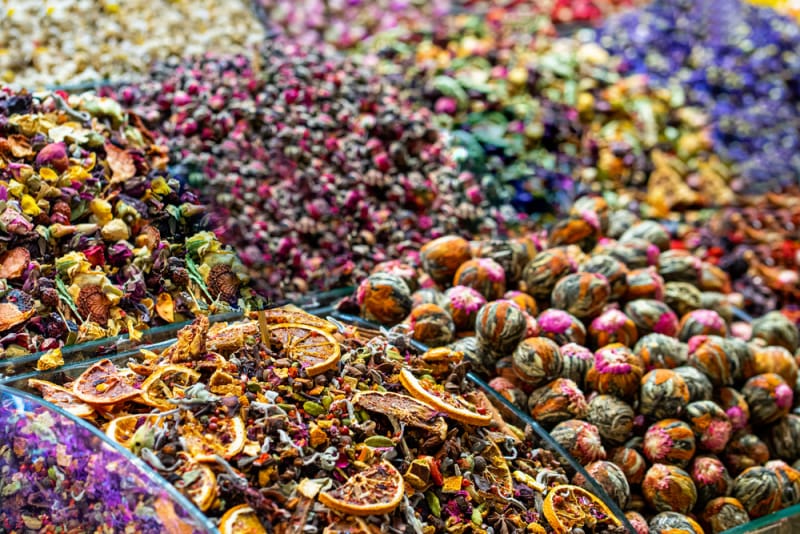
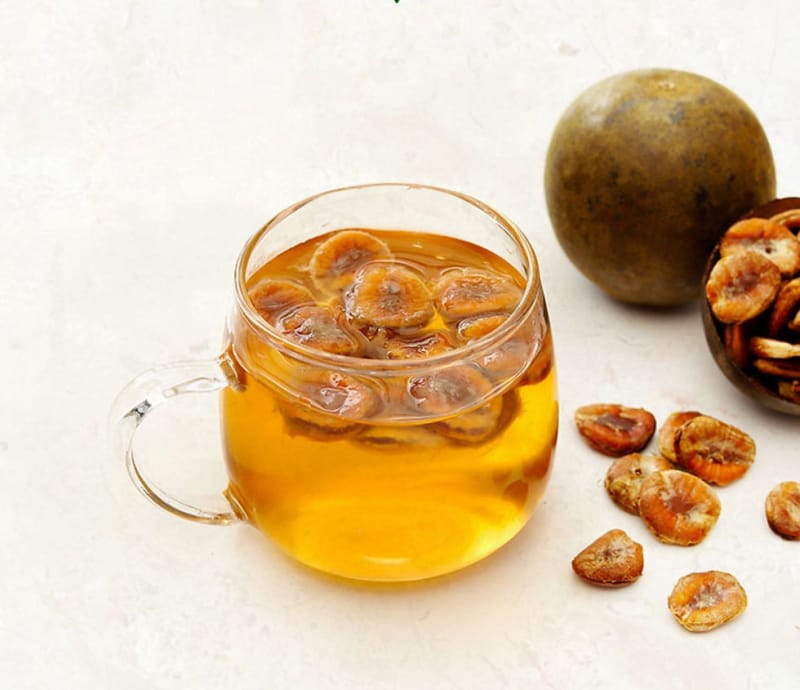
In southern China, households have simmered whole monk fruit for generations, cracking the shell and boiling it with water for a sweet, throat-soothing drink. The habit is woven into daily life: a pot of luo han guo tea cools in kitchens from Guangxi to Guangdong, and the dried fruit sits beside goji berries and chrysanthemum in pantry jars.
Bring a cup of freshly brewed monk fruit tea to your nose and the first thing you catch is a soft caramel sweetness with a roasted-nut warmth, almost like honeyed pear skins. On the palate it is gently sweet with a clean herbal finish and no bitter tail, which is why Western beverage and bakery formulators now reach for it to replace sugar in everything from iced tea to cookies.
Extract and Sweetener: Where the Value Moves
The extract business has become the fastest-growing slice of the trade. Dataintelo's 2025 market report sizes monk fruit sweetener at USD 1.8 billion and projects USD 4.2 billion by 2034 (9.8% CAGR), noting that powder form accounts for 48.3% of the market. Straits Research offers a more conservative range: USD 420 million in 2025 rising to USD 935 million by 2034 at 9.3% CAGR.
Whichever forecast you use, the direction is the same: demand is compounding as formulators cut sugar. That is why we now stock both the fruit for traditional buyers and the extract-grade raw material for sweetener producers.
Monk fruit sweetener market, USD million. Data: Straits Research (2025 report) and Dataintelo (2025 report).
Compliance, Traceability, and Export-Ready Docs
Monk fruit extract received FDA GRAS status in 2010, which opened the North American market wide, and whole dried fruit continues to ship under standard botanical-import channels. Guangxi's agriculture department reports that Yongfu's monk fruit products now export to 41 countries, with a brand premium of about 40% over unbranded goods.
A serious wholesale partner backs every lot with pesticide and heavy-metal testing, a certificate of analysis, and traceability back to the orchard. Buyers should ask for exactly that paperwork before committing a container, and any supplier who hesitates is signaling trouble.
Stock, Packing, and Shipping Built for Buyers
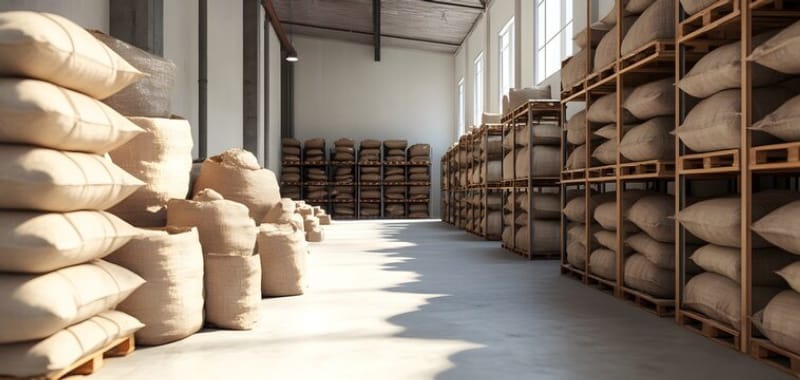
Wholesale monk fruit is normally packed in 10 kg or 20 kg kraft bags with an inner food-grade liner, palletized for 20- or 40-foot containers. Whole fruit, sliced flesh and powder each need different moisture controls in transit, so warehouses hold them in separate, climate-managed zones rather than one shared shelf.
Lead times depend on the season: dried whole fruit is available year-round from stored stock, while new-crop fruit ships fastest between December and April. Locking a quarterly allocation with your supplier protects you from the price swings that hit every spice when the crop is short.
How to Buy Monk Fruit That Actually Meets Spec
Start with a sample, not a price list. Send spicesmfr your target form, size and mogroside spec, and we will ship pre-shipment samples of whole fruit, sliced flesh and extract powder with full test reports. Once the spec is locked, we can hold allocation, blend to your label, and pack to your retail or foodservice format.
After years of shipping this fruit across three continents, our honest view is simple: monk fruit rewards buyers who treat it as a supply-chain product, not a trend. The sourcing, grading and documentation are all learnable, and they are exactly what we handle so your team can focus on formulation and sales.
Request Samples and Spec Sheets
Whole fruit, sliced flesh, and extract powder with COA and traceability docs. Tell us your target grade and volume, and we will respond with samples and a landed-cost estimate.
Leave a Comment