

Cassia Is A Different Bark From Ceylon Cinnamon
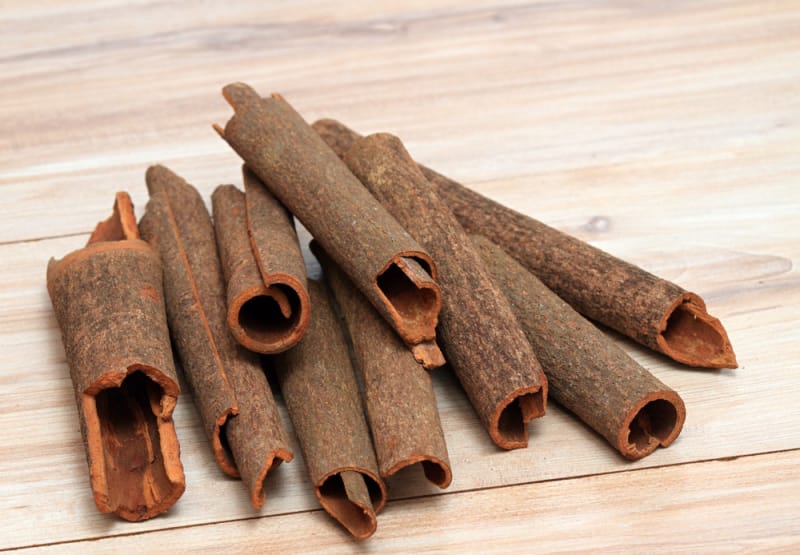
Open a carton of Guangxi cassia and the smell arrives before the invoice does. It is sweet at the front, then woody, then faintly resinous, with a sharp edge that Ceylon cinnamon never carries. The quills are thicker, single-curl, and the outer surface still shows the grey-brown cork layer unless it has been scraped.
Chefs describe the taste as "warmer and heavier" than true cinnamon, which is a polite way of saying it holds up in a long braise. In the US it is sold under the name cinnamon without argument. In the EU, coumarin limits mean buyers ask for origin, grade and a lab sheet before they ask for a price. That difference in regulation is why two shipments that look identical can be quoted a full grade apart.
Fangchenggang Supplies The Volume Buyers Rarely Trace
Most cassia leaving China is grown in a narrow band of hills along the Guangxi coast, and Fangchenggang is the centre of it. The city's agriculture bureau put cassia planting at 770,000 mu by October 2024, with star anise close behind at 740,000 mu. Two towns carry most of that bark: Naliang in Fangcheng district and Malang in Dongxing.
The numbers below come from local government releases, not from trade estimates. They matter because they explain why a buyer can ask for forty tonnes in a week and still get a consistent thickness: the supply is not scattered across five provinces, it is concentrated in two counties with decades of peeling experience.
| Growing area | Cassia area | Output noted | Year |
|---|---|---|---|
| Fangchenggang, citywide | 770,000 mu | Cassia planting area, city total | 2024 |
| Naliang, Fangcheng district | 380,000 mu | About 20,000 t bark a year, roughly RMB 300 M output value | 2022 |
| Malang, Dongxing | 121,000 mu | 1,900 t bark, 2,000 t twigs and leaves, 3,800 t fuel wood, over RMB 200 M total value | 2024 |
| Naliang spice processing park | Daily 2–3 t | Raw bark processed per plant per day in the peeling season | 2022 |
Sources: Fangchenggang Agriculture Bureau (2024); Guangxi Department of Agriculture and Rural Affairs (2024); Sina Finance report on Naliang (2022).
Bark Is Cut In Spring And Cured Until It Curls
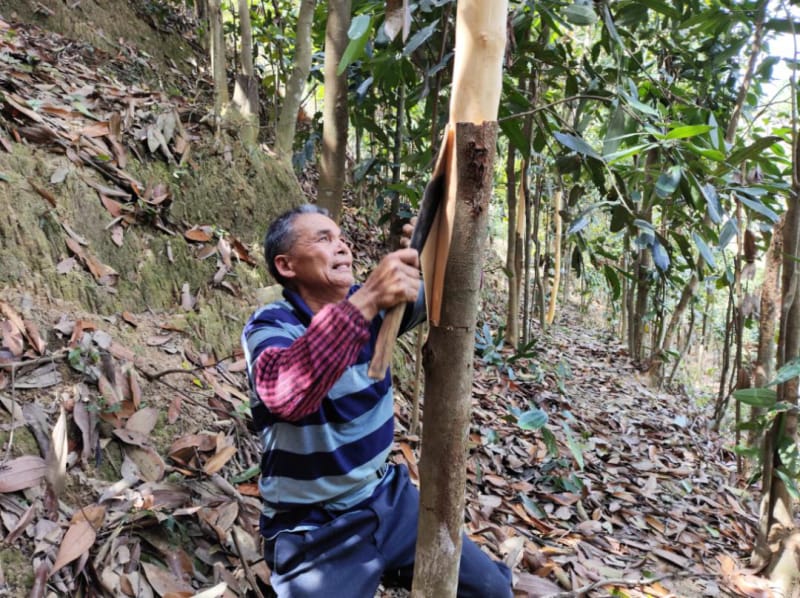
Cassia is not harvested leaf by leaf. The tree is cut near the base, the trunk is sectioned into lengths of roughly forty centimetres, and the bark is loosened with a curved knife or a horn spade. A skilled worker can strip a trunk in minutes; a poor cut tears the inner surface and drops the piece into the broken grade before it ever reaches a drying floor.
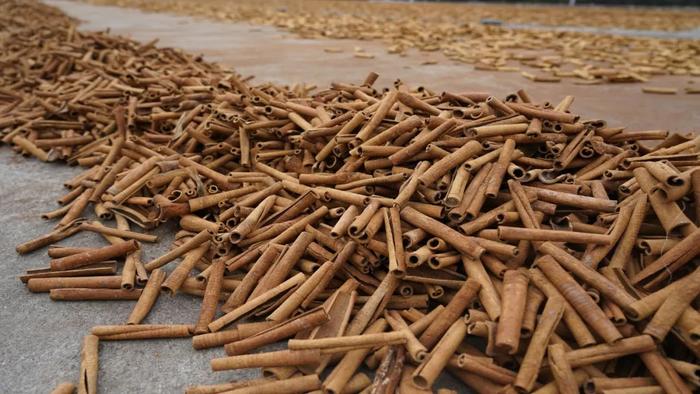
Fresh strips are scraped, laid out in the sun, and turned over two or three times a day. Drying takes several days in good weather. The bark tells you when it is ready: it curls into a single roll, the edges harden, and the piece snaps rather than bends. Then it is sorted, bundled, and left to rest before packing, because bark that is packed too warm will sweat inside a carton and arrive with mould at the cut ends.
Rain is the enemy of this process. A wet week does not just delay the shipment, it pushes part of the crop into a darker, less aromatic grade that buyers reject on sight.
Grades Run By Thickness, Length And Oil Content
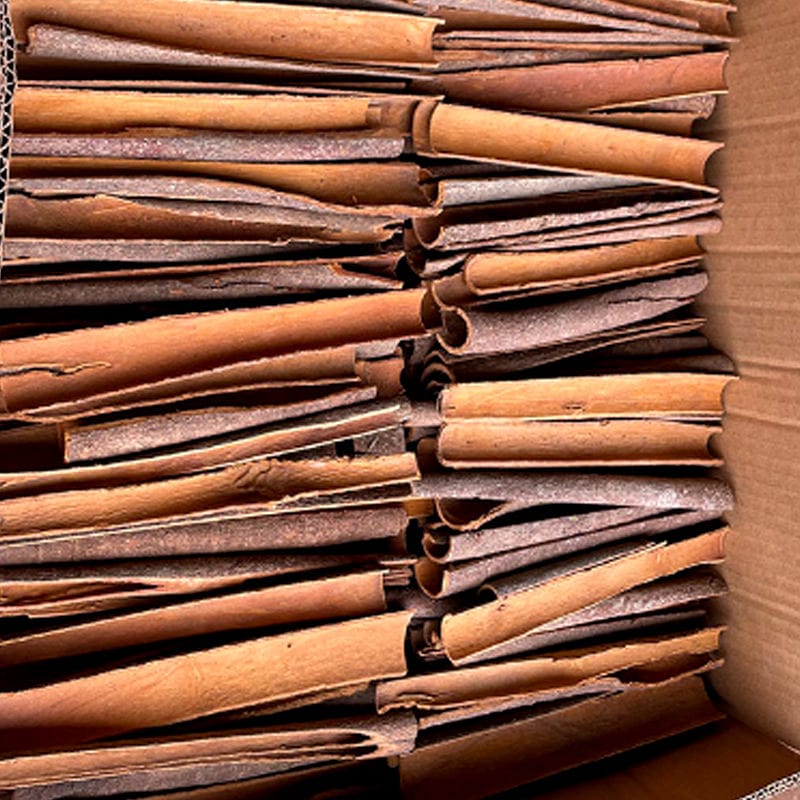
The trade names sound archaic, but each one answers a practical question. Whole quills, often called cassia sticks or tong cassia, are sold by wall thickness and length. Flat pieces come from larger trunks that cannot be rolled. Broken bark goes to grinding. Inner scrapings, the thin pale layer under the cork, are the material buyers want when they need a clean, light-coloured powder.
What separates a good lot from an average one? Not the photograph. It is the wall thickness measured at the middle of the quill, the share of pieces below the stated length, and how much of the load is dark, damp or insect-holed. A supplier who quotes only "whole cassia, good quality" is telling you they have not graded the lot at all.
Powder And Extract Carry The Industrial Volume
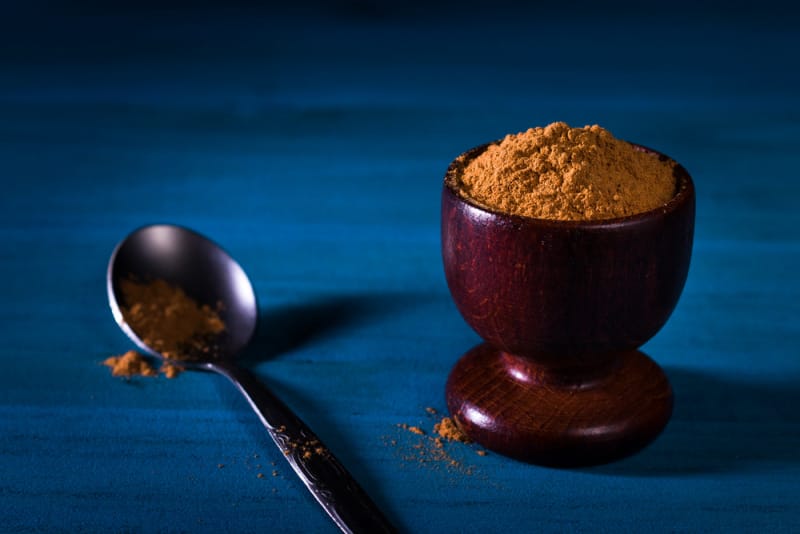
Retail buys sticks. Industry buys powder and extract, and that is where tonnage actually moves: seasoning blends, curry bases, bakery mixes, sausages, and the steam-distilled oil used in flavours and fragrances. Grinding changes the economics. A tonne of quills becomes roughly a tonne of powder, but the sieve size, the volatile oil level and the colour decide whether it goes into a premium blend or a discount line.
Market reports disagree about the size of this business, and the disagreement is worth understanding before anyone quotes a growth rate in a pitch deck.
| Report | Scope | Base year | Forecast | CAGR |
|---|---|---|---|---|
| PW Consulting | Cinnamon bark | USD 973.35 M (2025) | USD 1,507.61 M (2032) | 6.5% |
| Market Research Future | Cinnamon, all types | USD 1.31 B (2025) | USD 2.29 B (2035) | 5.31% |
| Emergen Research | Cinnamon, all types | USD 665.0 M (2025) | USD 932.3 M (2035) | 3.4% |
Figures as published by each research house; scopes differ, so the totals are not directly comparable.
My own reading: the spread between USD 665 million and USD 1.31 billion for the same year is not a forecasting error, it is a definition problem. One house counts only bark traded in identifiable channels, another folds in powder, oil and retail-packaged goods. Use the direction, not the decimal.
Yulin Moves The Tonnage Before Any Port Does
China grows more cassia than any other country, and a large share of it passes through one inland market before it reaches a container. Yulin Fuda International Spice Logistics Port handled RMB 33.5 billion in trade in 2025, more than one million tonnes of goods, with daily throughput above a thousand tonnes and three consecutive years above RMB 30 billion. Around 80% of the spice traded domestically and more than two thirds of the spice in global circulation is gathered and redistributed there.
For a foreign buyer this sounds like a domestic detail. It is not. It means the price you are quoted usually reflects a Yulin auction floor, not a farm-gate deal, and it means a supplier who can hold stock in Yulin can fill a mixed container of cassia, star anise and bay leaf without waiting for three separate harvests.
| Producer | Output 2024 (t) | Share |
|---|---|---|
| China | 94,216 | 38.0% |
| Vietnam | 71,307 | 29.0% |
| Indonesia | 55,204 | 23.0% |
| Sri Lanka | 20,587 | 8.4% |
Source: FAO production data compiled by Commodity Origins, 2024. The four origins above account for 98.4% of reported output.
Where Cassia Lands In A Real Kitchen
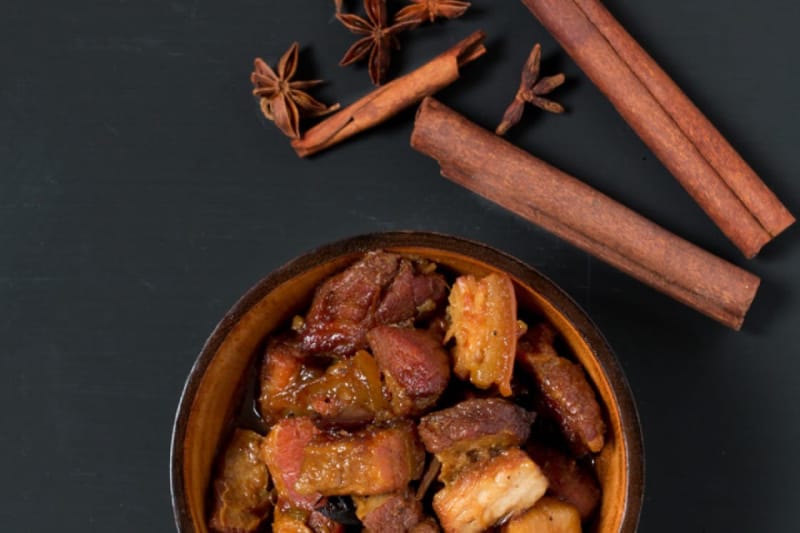
Put one stick into a pot of pork belly with soy, rock sugar and star anise, and the difference shows up about forty minutes in. The sauce turns glossier, the sweetness stops tasting like plain sugar, and the aftertaste sits at the back of the tongue a little longer than it should. Pull the stick out too late and the bitterness of the outer bark starts to edge in.
That is the practical rule most recipe writers skip: cassia is a background note with a long finish, not a foreground flavour. It works in braises, pickles, curry powders, pumpkin and apple fillings, and in mulled drinks where a single quill can carry a whole litre. It fails in delicate dishes, where its weight flattens everything else on the plate.
What Belongs In A Cassia Purchase Order
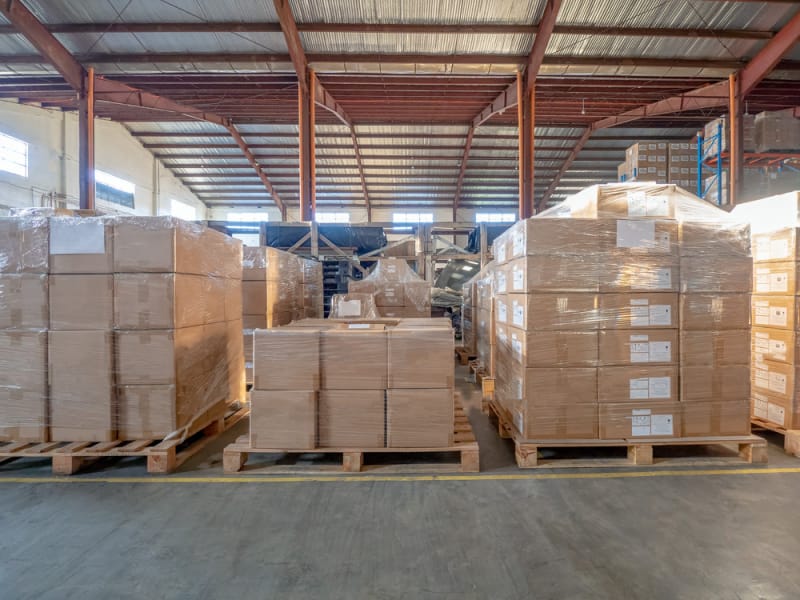
Price is the last line of a cassia PO, not the first. Before that come moisture, volatile oil, foreign matter, piece length, wall thickness and the share of broken bark, then the packing: usually ten or twenty-five kilogram cartons with an inner liner, on pallets, with a moisture barrier for tropical routes. Ask for the lot number and the drying date. A supplier who cannot name the drying week is reselling someone else's stock.
Ask for a pre-shipment sample of the actual lot, not a catalogue sample. Send it to a lab for coumarin and pesticide residue if the destination is the EU, and keep the sealed retain sample until the container is discharged. It costs a few hundred dollars and settles arguments that cost far more.
One more thing worth saying plainly: in this category the cheapest quotation is almost always wet bark sold as dry. The saving disappears in the warehouse, six weeks later, when the cartons arrive heavy and the cut ends have gone grey.

Buy cassia by grade, not by photograph
spicesmfr quotes whole quills, flat bark, broken and powder from Guangxi, with lot-level moisture and oil data before the container is booked. Tell us the destination, the application and the thickness you need, and we will send the grade sheet first.
Leave a Comment