

A Leaf On A Tree, Not A Piece Of Bark
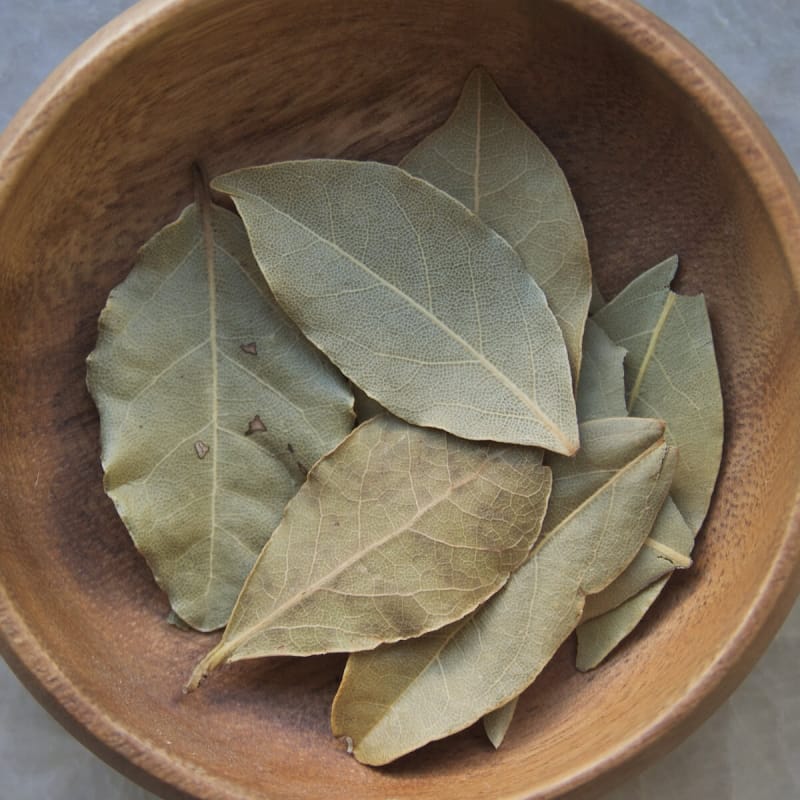
Buyers mix this up more often than they admit. Cassia and cinnamon are quills cut from the inner bark of a tree. Bay leaf is the dried leaf of Laurus nobilis, an evergreen that grows across the Mediterranean basin, and the two ingredients do not behave alike in a formulation. Crush a dried bay leaf between thumb and forefinger and the smell arrives before the leaf breaks: eucalyptus-adjacent at first, then a warm, oddly tea-like sweetness with a resinous edge that stays on the skin. There is no cinnamon sweetness in it at all.
The taste is quieter than the aroma promises. Simmered for forty minutes in a stock, a leaf gives up a green, slightly bitter herbal note and a faint menthol tingle at the back of the throat — a savoury depth rather than a flavour of its own. That is exactly why it works in long-cooked dishes and does very little in a five-minute saute. If your customer expects the leaf to taste like something, they will be disappointed. If they expect it to make everything else taste rounder, they will keep ordering.
Türkiye Ships It, China Moves It
Start with the number that decides your price. Türkiye's General Directorate of Forestry reported that the country ranked first worldwide in bay leaf exports at the end of both 2024 and 2025, with export value rising from USD 8 million in 2003 to USD 60.5 million in 2025 across 13,567 tonnes. That works out to roughly USD 4,460 per tonne at the border, before freight, sorting or repacking.
Where those tonnes land matters for a Chinese supply chain. Turkish state broadcaster TRT, quoting the sector, lists China alongside Vietnam, Thailand, the Philippines, the United States, Brazil, Myanmar and Germany as destination markets. So the leaf you buy from a Guangxi consolidator is very often Turkish leaf that entered China in bulk, was cleaned, re-graded and re-packed, and left again. There is nothing shady about that circuit. It is normal spice trade, and it is the reason a buyer can take four pallets of three different grades from one container instead of chasing three separate origins.
| Year | Export value | Volume | Implied unit value | Position |
|---|---|---|---|---|
| 2003 | USD 8.0 million | n/a | n/a | Minor exporter |
| 2024 | n/a | n/a | n/a | World No. 1 in exports |
| 2025 | USD 60.5 million | 13,567 t | ≈ USD 4,460 / t | World No. 1 in exports |
Source: Türkiye General Directorate of Forestry (OGM), 2026, citing TÜİK trade data. Unit value calculated from the reported value and volume; it is a national average across all grades, not a quote for any single specification.
Hand Picked, Shade Dried, And At The Mercy Of Weather
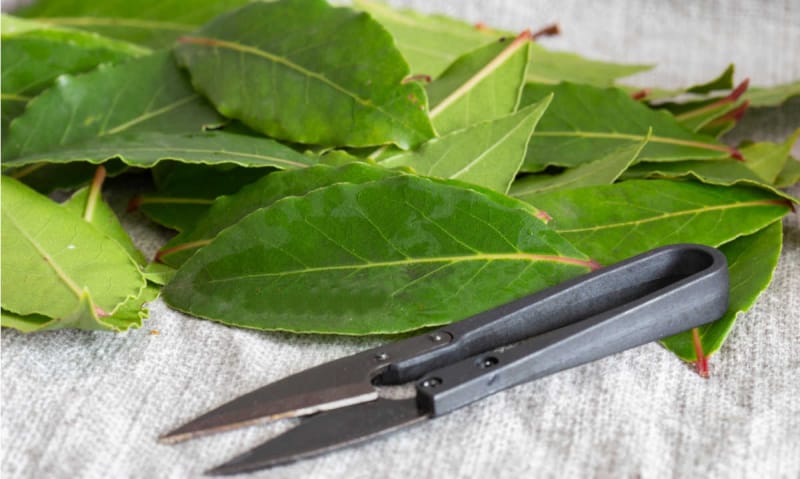
Bay laurel is harvested by hand because no machine can tell a two-year-old leaf from a four-year-old one. Growers leave young leaves on the branch — they carry too little oil — and take the mature, leathery ones through the warm months, then dry them in shade or under low heat until they turn brittle and the colour fades from glossy green to a muted grey-olive. Skip that step and the leaf moulds in the bag within a week of a sea voyage.
Labour is not a rounding error in this trade. Market research published in October 2026 put manual harvest at roughly 42 percent of cost of goods sold for whole leaf and powder, concentrated in Türkiye and India where hand-picking remains the only commercially viable method. The same analysis estimated that drought across Turkish growing regions cut harvest volumes by 15 to 20 percent. That is the mechanism behind most price spikes in this category, and it is worth remembering when a quotation looks unusually generous.
The Grade Sheet Matters More Than The Origin
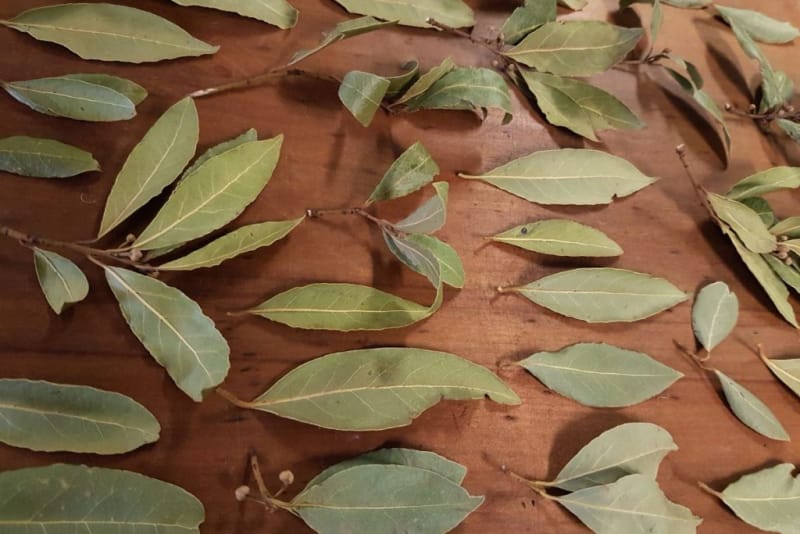
Two lots can be the same cultivar, the same country and the same crop year, and still be worth very different money. What separates them is leaf length, colour consistency, stem content, broken-leaf percentage, moisture and the absence of foreign matter. A buyer writing a specification should name every one of those, because "whole bay leaf" on its own tells a supplier almost nothing.
Leaf length is the first filter. Mature Laurus nobilis leaves run about 5 to 10 cm; anything under 4 cm is usually screened out of a top grade and lands in broken or powder. Colour is the second: uniform grey-olive across the lot, not a mix of fresh green and brown. Stem and twig content is the third, and it is where cheap offers hide — 3 percent stem by weight is invisible in a photo and very visible in a customer complaint.
| Grade | Leaf length | Stem / foreign matter | Moisture | Usual application |
|---|---|---|---|---|
| Whole, select | 7–10 cm | ≤ 1 % | ≤ 10 % | Retail jars, food service, premium blending |
| Whole, standard | 5–7 cm | ≤ 2 % | ≤ 11 % | Industrial seasoning, canning, stock bases |
| Broken / cut | < 5 cm pieces | ≤ 3 % | ≤ 11 % | Extraction, oleoresin, sausage and pickle blends |
| Ground | 40–80 mesh | n/a | ≤ 9 % | Dry rubs, instant soups, seasoning sachets |
Note: these are conventional commercial bands used to frame a contract, not a published standard. Final figures are agreed per purchase order and verified by third-party inspection; always state your own limits on the PO.
Growth Is Coming From Paperwork, Not Appetite
Demand for bay leaf is not growing because more people suddenly want bay leaf. It is growing because food manufacturers need a documented supply chain, and documented supply chains cost money. Three published estimates landed within the last year and they disagree on the absolute size, which is normal; what they agree on is mid single-digit annual growth.
| Source | Base year value | Forecast value | CAGR |
|---|---|---|---|
| Facts & Factors | USD 0.92 bn (2025) | USD 1.42 bn (2034) | 4.2 % (2026–2034) |
| Market Data Forecast | USD 929.78 m (2025) | USD 1.57 bn (2034) | 6.0 % (2026–2034) |
| Accio (platform estimate) | USD 1.2 bn (2024) | USD 1.7 bn (2030) | not disclosed |
Sources: Facts & Factors, Market Data Forecast, Accio, all accessed November 2026. Base years and scopes differ, so the figures are not directly interchangeable; the Accio number is a marketplace estimate without a published methodology.
Read the spread, not the headline. A 4.2 percent and a 6 percent forecast over the same period is the difference between "steady" and "tightening", and for a buyer the useful signal is that this is a mature category. Nobody is going to double bay leaf consumption in five years. What does change is who is allowed to sell into retail and food service, because clean-label programmes ask for residue limits, moisture certificates and origin documentation that a loose-load trader simply cannot produce.

Why A Turkish Leaf Ships From Yulin
Here is the part that surprises first-time buyers. Yulin, in Guangxi, does not grow meaningful volumes of Laurus nobilis — there is no commercial plantation base for it in the province. What Yulin has is a concentration of spice trade that makes re-consolidation cheaper than doing it anywhere else. The Yulin Fuda International Spice Logistics Port recorded RMB 33.5 billion in transaction value for 2025, moved more than one million tonnes over the year, and has now cleared RMB 30 billion for three consecutive years, per Yulin Daily and Xinhua's Guangxi bureau.
The scale claim is the one worth quoting carefully: roughly 80 percent of China's spice trade and more than two thirds of the spice volume circulating globally passes through this market, according to CNR. Treat that as a market-position statement from Chinese state media rather than a customs statistic — but the operational consequence is real. A consolidation point with that density can hold Turkish whole leaf, Indian cut leaf and domestic cassia in adjacent warehouses, and build a mixed container in days.
| Indicator | Figure | Period | Source |
|---|---|---|---|
| Annual transaction value | RMB 33.5 bn | 2025 | Yulin Daily, Mar 2026 |
| Annual throughput | > 1 million t | 2025 | Yulin Daily, Mar 2026 |
| Daily flow | > 1,000 t / day | 2026 | Xinhua Guangxi, Mar 2026 |
| Registered traders on site | 1,911 | 2025 | Yulin Daily, Mar 2026 |
| Occupancy rate | > 95 % | 2025 | Yulin Daily, Mar 2026 |
Sources as listed at the end of this page. Figures are as reported by the cited outlets; no independent audit of the underlying market data was performed.
What The Leaf Does In A Pot, And What It Will Not Do
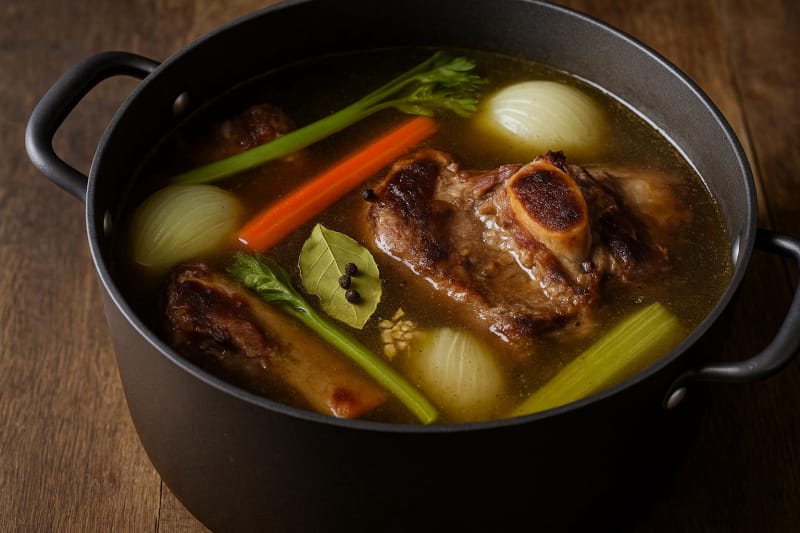
Drop one leaf into cold water with beef bones and let it come up to a simmer. For the first twenty minutes you will smell almost nothing through the lid. Then, somewhere past the half-hour mark, the steam turns faintly resinous and sweet, and the broth underneath gains a roundness it did not have before — less a new flavour than the removal of a hard edge. Taste it at forty minutes and there is a subtle green bitterness at the back of the tongue, the same note that makes people say the leaf is "astringent". Leave it in for three hours and that bitterness wins. This is a spice with a window, not a spice you can forget.
So why do recipes tell you to fish it out before serving? Not because it is poisonous, and not only because a whole leaf on a plate looks careless. Past a certain point the leaf's bitter compounds overtake the aromatics, and in a pressure-cooked or retorted product that happens faster than on a stove. In canned stews, retort pouches and instant soup bases, the sensible move is cut leaf or a measured oleoresin, not whole leaf — the leaf is there for the note, and the note does not need the leaf's body.
My own view, after enough shipments to be tired of the argument: whole bay leaf is a texture decision as much as a flavour decision. Buyers who insist on whole leaf for a retort application are usually protecting a label claim, not a sensory result.
What To Put In The Purchase Order
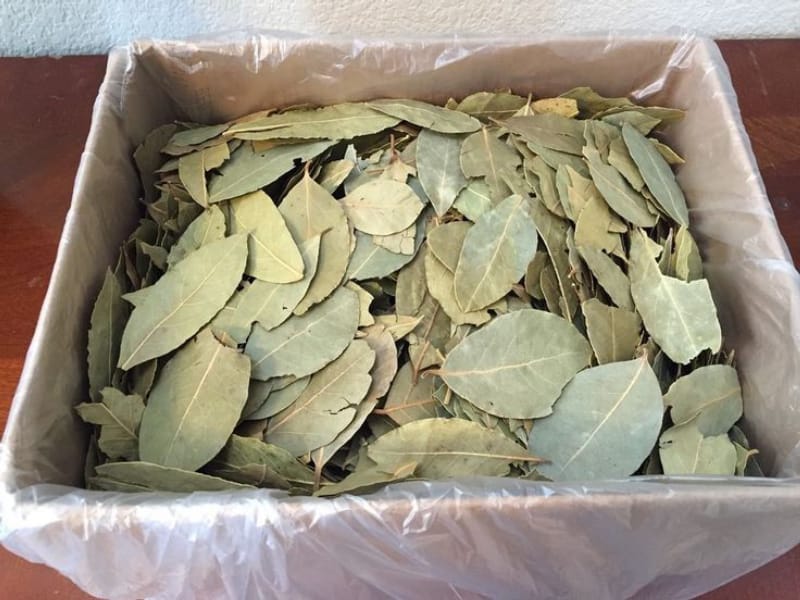
Six lines decide whether the container is what you expected. First, leaf length band with a tolerance, not a single number. Second, maximum stem and twig content by weight, measured on a sample you both agree on. Third, moisture ceiling with the test method named, because 10 percent by oven vs 11 percent by moisture analyser is a real commercial gap. Fourth, broken-leaf allowance. Fifth, a screen or sieve size for cut and ground material. Sixth, the packaging itself — net weight per carton, inner liner, pallet pattern and whether the carton carries your artwork or stays neutral.
Add two things that are not specifications. Ask for a pre-shipment sample drawn from the actual lot, not from a stock photo lot, and ask which crop year it is. Bay leaf holds its aroma for roughly twelve months in a sealed liner and noticeably less in a porous bag; a 2025-crop lot bought in late 2026 is not wrong, but you should know it and price it accordingly. The suppliers who resist that question are telling you something.
Sourcing bay leaf through Yulin
Spicesmfr works from the Yulin Fuda International Spice Logistics Port: whole, cut and ground bay leaf, mixed containers, third-party inspection on request, and paperwork that matches the lot.
Leave a Comment