Cassia Cinnamon Wholesale Supply from China for Global B2B Buyers
17 Oct
0 Comment(s)26 View(s)
01
What Sets Cassia Apart from Ceylon
When a buyer says "cinnamon," the conversation usually starts with cassia, and for good reason. Cassia (Cinnamomum cassia) is the thicker, darker, more pungent bark that dominates the bulk spice trade, while Ceylon (Cinnamomum verum) is the delicate, costly cousin grown mainly in Sri Lanka. The two are not interchangeable on a spec sheet.
Chinese cassia rolls into hard, single-layer quills with a high content of cinnamaldehyde, the compound behind its sharp, sweet heat. Ceylon peels into many thin layers, carries far less cinnamaldehyde, and commands a steep price premium. China and Vietnam together account for roughly 89% of global cinnamon output (NPJ Science of Food, 2025), which is why wholesale buyers looking for dependable volume almost always anchor their program on cassia.
Data compiled from publicly available spice trade references; coumarin and flavor descriptions follow established commodity profiles.
02
Where China Grows Its Cinnamon
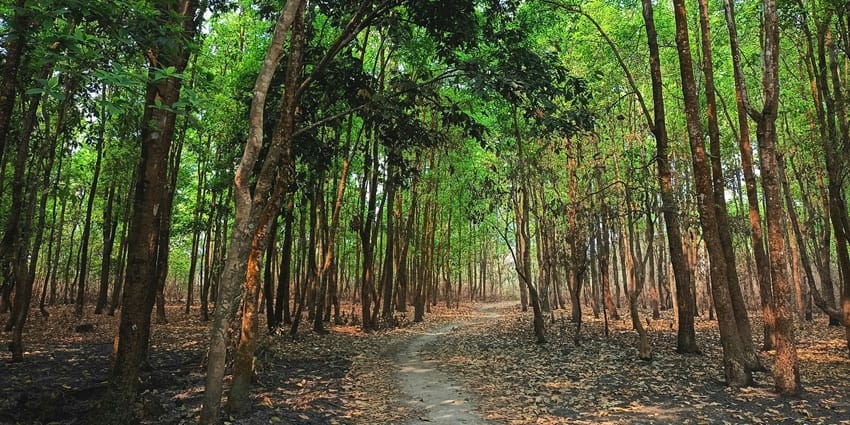
The heart of Chinese cassia production sits in the humid south, where Guangxi alone contributes about 61% of the country's output, estimated near 87,000 metric tons a year (HERBSEA, citing IndexBox and trade data). Guangdong's Luoding district adds another major node and exported 15,192 tons of cinnamon and botanical seasonings in 2024, worth RMB 256.5 million, a 12.8% volume increase over the prior year, reaching buyers in more than 30 countries.
Within Guangxi, Fangchenggang is the flagship origin. The Fangcheng district, officially named "China's Hometown of Cinnamon" in 2001, produced 15,850 tons of cinnamon bark in 2024 with an output value of RMB 348 million, across more than 1.25 million mu planted to cinnamon and star anise (Fangchenggang Municipal Government). Dongxing, a border city nearby, cultivates over 130,000 mu of cinnamon and ships 2,700 tons of bark plus 15,000 tons of leaves a year.
Image source: TripXL (Koggala cinnamon plantation, Sri Lanka; photo by Ritam Baishya / Unsplash)
That concentration matters commercially: sourcing from one proven origin cluster means harvest timing, drying capacity and export logistics can be coordinated from a single region, which keeps both quality and lead times predictable.
03
How Cassia Goes from Bark to Quill
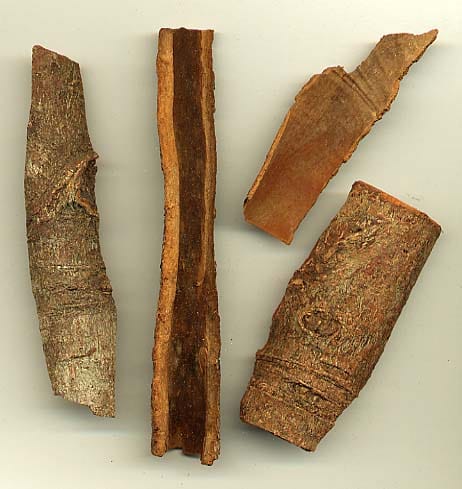
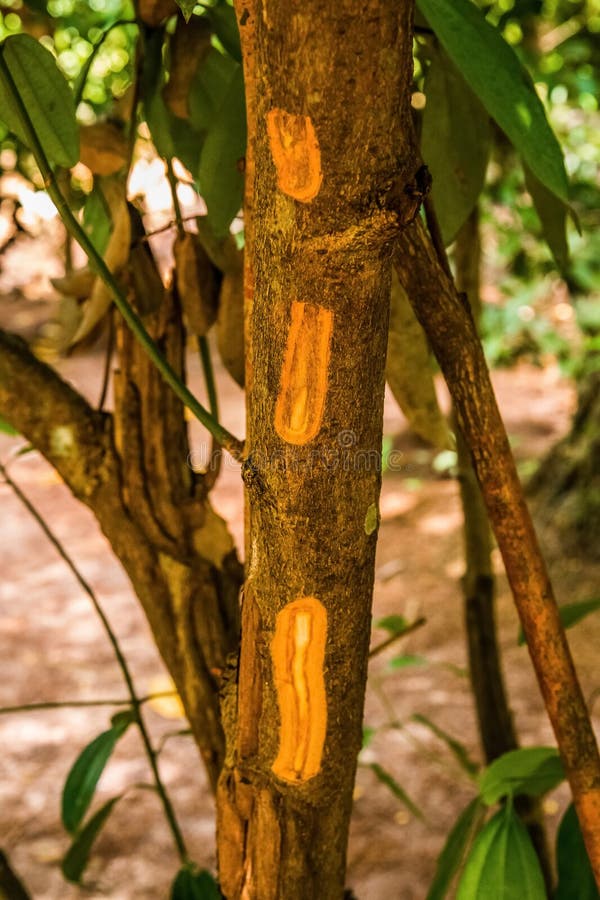
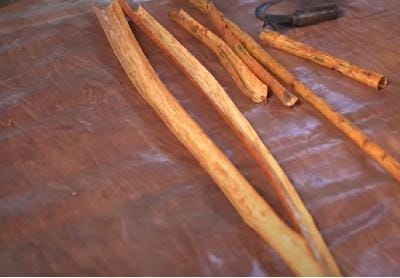
Cassia is not a seed or a fruit; it is the inner bark of a tree that must be peeled by hand at the right moment. Harvest runs mainly from March to May, when spring rains loosen the bark from the cambium. Peeling is done with a curved knife, lifting long strips that curl naturally as they dry into the familiar hollow quills.
In Guangxi and Guangdong, the rhythm of the harvest still sets the annual price cycle. A dry, sunny window produces well-cured bark with a clean red-brown color and high oil content; rainy stretches force slower air-drying or kiln finishing that changes both yield and cost. Seasoned buyers track the weather in the producing counties as closely as they track freight rates, because both end up priced into the container.
Open a case of fresh cassia quills and the first thing you notice is the smell, not the look. The aroma is dense and immediate: sweet at the front, then woody and resinous, with a faint clove-like sharpness that tells you the bark is oil-rich. It is a scent built for volume, far more assertive than the delicate perfume of Ceylon, which is exactly why it anchors spice blends across three continents.
On the tongue, cassia starts warm and sugary, then tightens into a peppery burn that lingers at the back of the palate. That two-stage finish is what food brands build recipes around. American kitchens stir it into oatmeal and apple pies at breakfast; Indian households drop a stick into chai; Moroccan tagines and Middle Eastern rice pilafs take it in whole; and German and Scandinavian bakers weave it into Christmas cookies. When your buyers say they need cassia that tastes and smells the same in every container, this is the profile they mean.
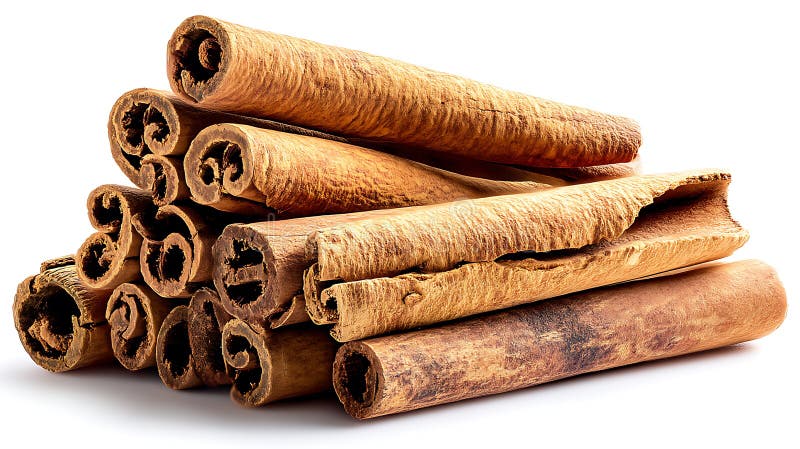
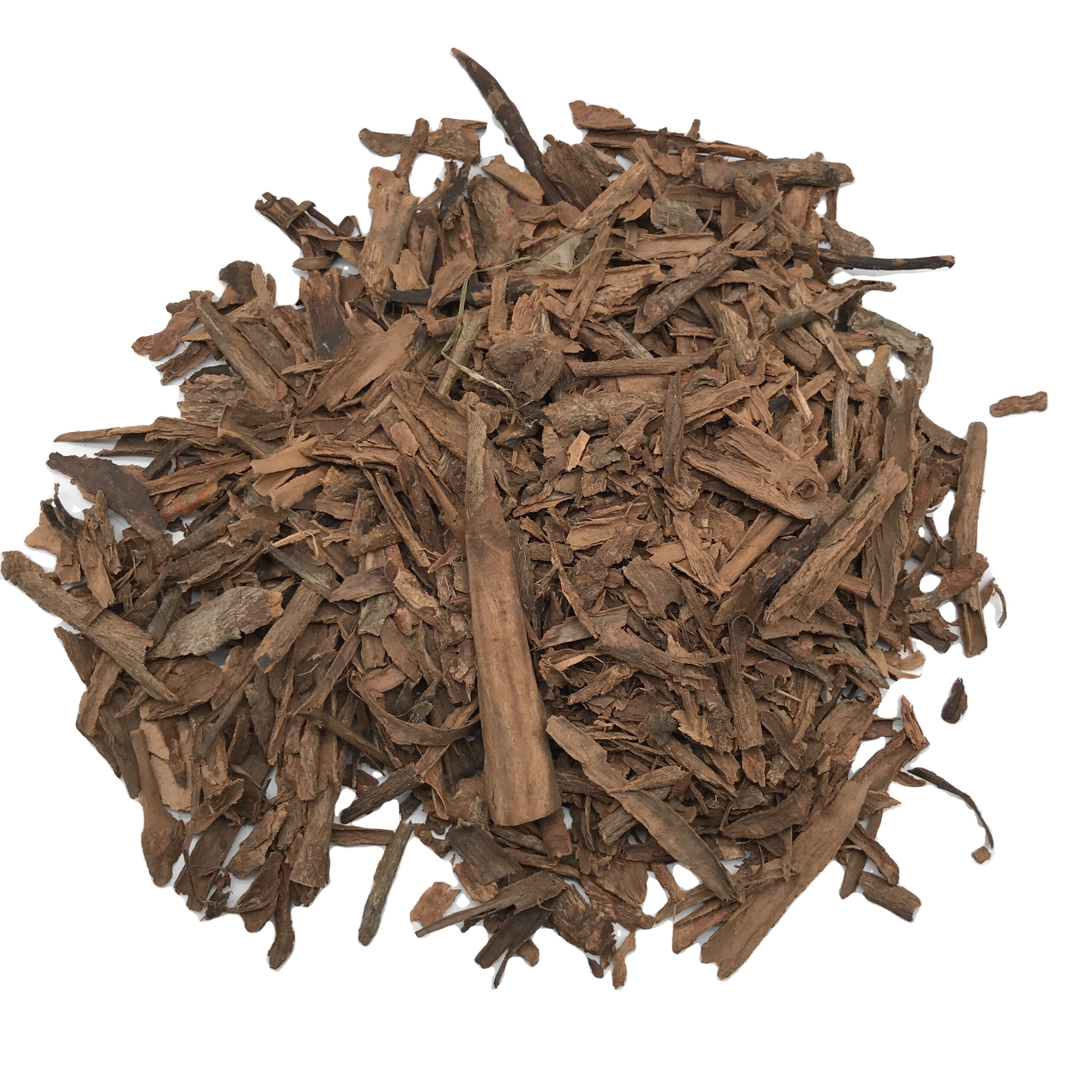
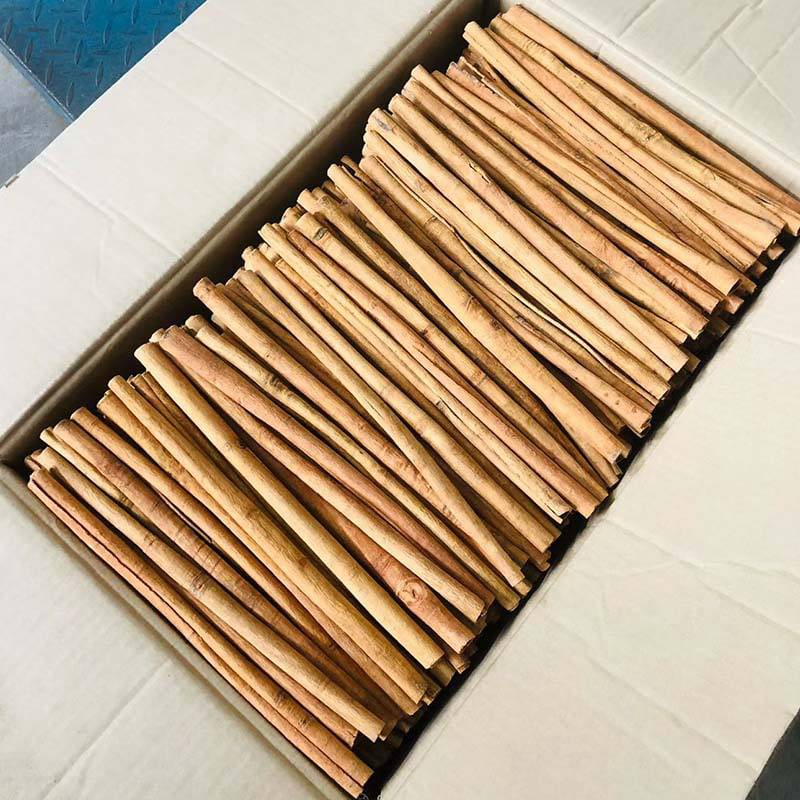
Bulk cassia is sold in a small set of standardized forms, and the form you choose changes the arithmetic of your landed cost. Whole quills travel compactly and hold their aroma longest; split bark (broken from quills) costs less per kilo; powder maximizes extraction yield for blends, tea bags and extracts; cassia oil captures the highest value per unit for flavor houses and fragrance makers.
Practical spec points that separate a smooth program from a painful one: moisture content (usually 13% max), quill length and diameter, oil content by steam distillation, and freedom from mold and insect damage. A dependable supplier publishes these numbers on the COA and re-verifies them on every lot, not just on the first sample.
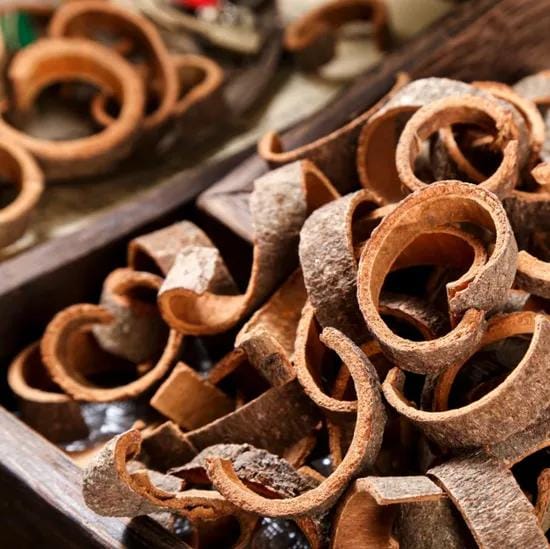
Image source: Druera Ceylon Cinnamon (peeling stage of inner bark)
Table 2. Common cassia export forms
Form
Typical use
Value position
Whole quills
Retail packs, brewing, mulled drinks
Mid; strong presentation value
Split bark / broken
Industrial extraction, blends
Cost-efficient volume
Ground powder
Bakery mixes, spice blends, tea
High turnover, spec-sensitive
Cassia oil
Flavor, fragrance, personal care
Highest margin per unit
06
Yulin Fuda, the World's Spice Clearing House
If you buy spices from China in serious volume, the road passes through Yulin. The Fuda International Spice Logistics Port in Guangxi handles more than 160 spice varieties and hosts over 700 trading merchants. By official reporting, about 80% of the spices circulated in China and more than two thirds of the world's flowing spices pass through Yulin Fuda for distribution.
The scale is not decorative. Yulin Fuda's annual trading value exceeded RMB 33.5 billion in 2025, the third consecutive year above RMB 30 billion (China National Radio / Xinhua / China Daily reports). For a B2B buyer, that concentration means one sourcing stop can compare cassia from multiple origins, arrange consolidated loading, and validate quality against a deep pool of competing lots.
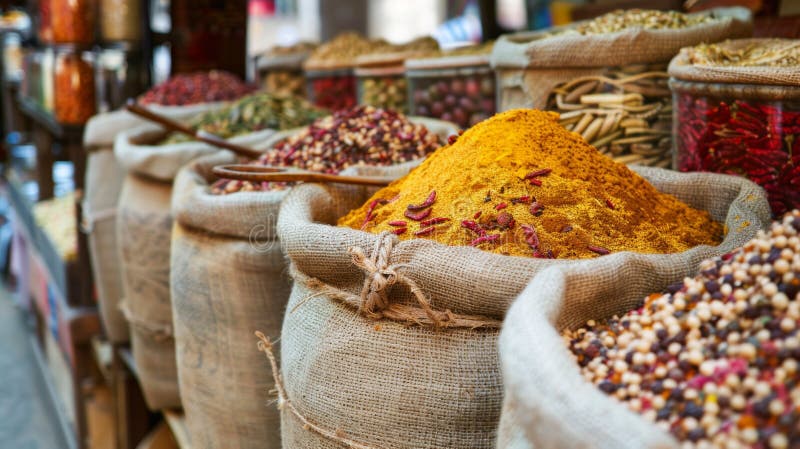
Image source: Dreamstime (traditional spice market sacks and grains)
07
Bulk Pricing and Export Benchmarks
Cassia's price advantage is the reason it wins the volume game. In 2024, Sri Lanka's cinnamon exports averaged about US$10,969 per metric ton, while China's cassia averaged roughly US$2,316 per ton, a gap of more than 4.7 times (IndexBox data cited by HERBSEA). For a buyer moving 20-foot containers, the spread between Ceylon and cassia is the difference between a premium line and a volume program.
Chinese cassia export volumes keep climbing on that value story. In 2024 China shipped an estimated 43,000 tons of cassia worth about US$187 million, up 5.9% in volume year over year, with more than 45% of export volume heading to Southeast Asia (trade data cited by HERBSEA). Global market forecasts point the same direction, with the cinnamon market growing from US$1.14 billion in 2025 to US$1.95 billion by 2034 at a 6.11% CAGR (Fortune Business Insights).
Global cinnamon market value, 2025 vs 2034 (US$ billion) — Fortune Business Insights
08
Food and Bakery Demand Keeps Cassia Moving
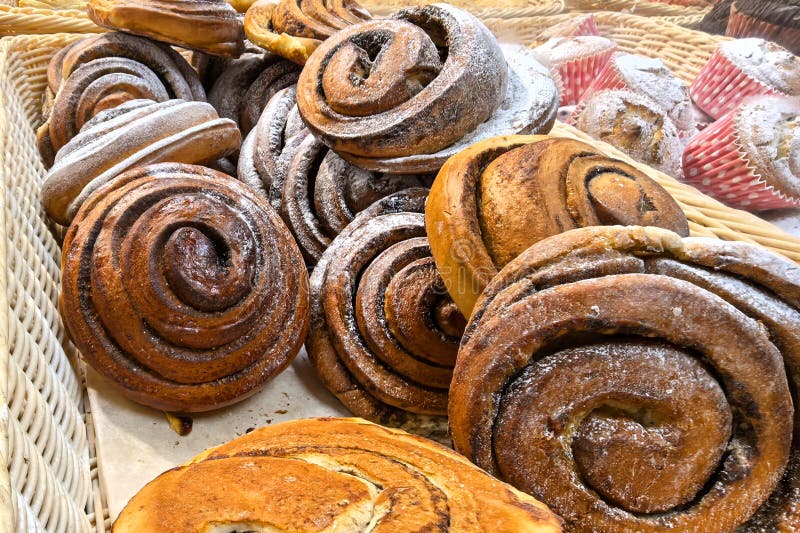
Follow the end-use numbers and you will see why cassia never sits still in the warehouse. Bakery applications hold the largest slice of global cinnamon demand at 22%, followed by processed foods at 20% and beverages at 18% (Fortune Business Insights, 2025). American breakfast culture alone turns cassia into cinnamon rolls, apple pies and morning oatmeal; across South Asia it steeps into chai, and across the Middle East it seasons slow-cooked lamb and rice dishes.
On the palate, cassia delivers a first hit of sweet warmth, then a woody, peppery burn that lingers at the back of the tongue. That is why bakeries and beverage brands pay for consistency: a batch with low oil content tastes flat, while an over-oiled lot can turn a dessert bitter. The sensory standard is part of the specification.
Image source: Dreamstime (baked cinnamon rolls at a bakery counter)
Share of global cinnamon demand by application, 2025 — Fortune Business Insights
09
Fragrance and Wellness, Where the Premium Lives
Beyond the kitchen, cassia's essential oil and aromatic extracts carry the highest margins in the trade. Essential oils and aromatherapy take 16% of global demand, pharmaceuticals 14%, and cosmetics 10% (Fortune Business Insights). For a B2B buyer, that split signals a second revenue line: quills and powder for food, oil and extracts for fragrance houses and wellness brands.
Smell a freshly opened case of cassia quills and the description writes itself: a nose-filling sweetness with a woody, resinous bite, closer to hot bark and clove than to the soft perfume of Ceylon. In my experience sourcing spices for export programs, that intensity is exactly why formulators reach for cassia oil over its pricier rival; it delivers more aroma per gram at a fraction of the cost. The smart importers I work with treat fragrance-grade cassia not as an afterthought, but as the product that protects their margin when food-grade prices tighten.
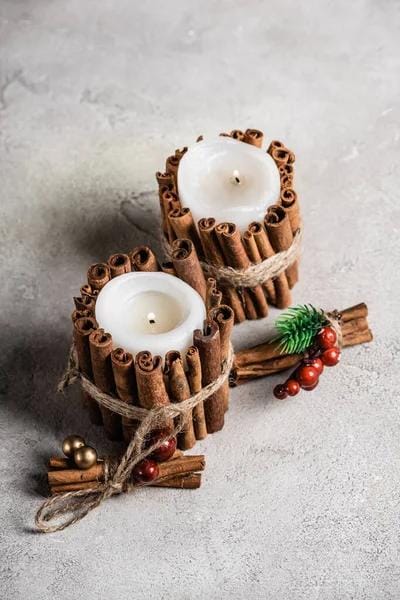
Image source: VistaCreate (scented candles decorated with cinnamon sticks)
10
Coumarin Compliance Is a Sourcing Issue Now
No serious cassia purchase discussion can skip coumarin. Cassia naturally contains coumarin at levels far above Ceylon, and European Union law caps it in food under Regulation (EC) No 1334/2008, with limits as tight as 50 mg/kg for ground cinnamon. The regulatory pressure is not theoretical: a 2025 study by the EU's Joint Research Centre found that more than 66% of cinnamon samples on the EU market failed quality or authenticity checks, or exceeded coumarin limits.
Buyers who ignore this absorb the risk downstream, in recalls, relabeling and lost shelf space. The practical answer is documentation: a COA that states coumarin per lot, botanical identity testing to confirm the species, and blending or sourcing decisions made before the container sails, not after customs flags it.
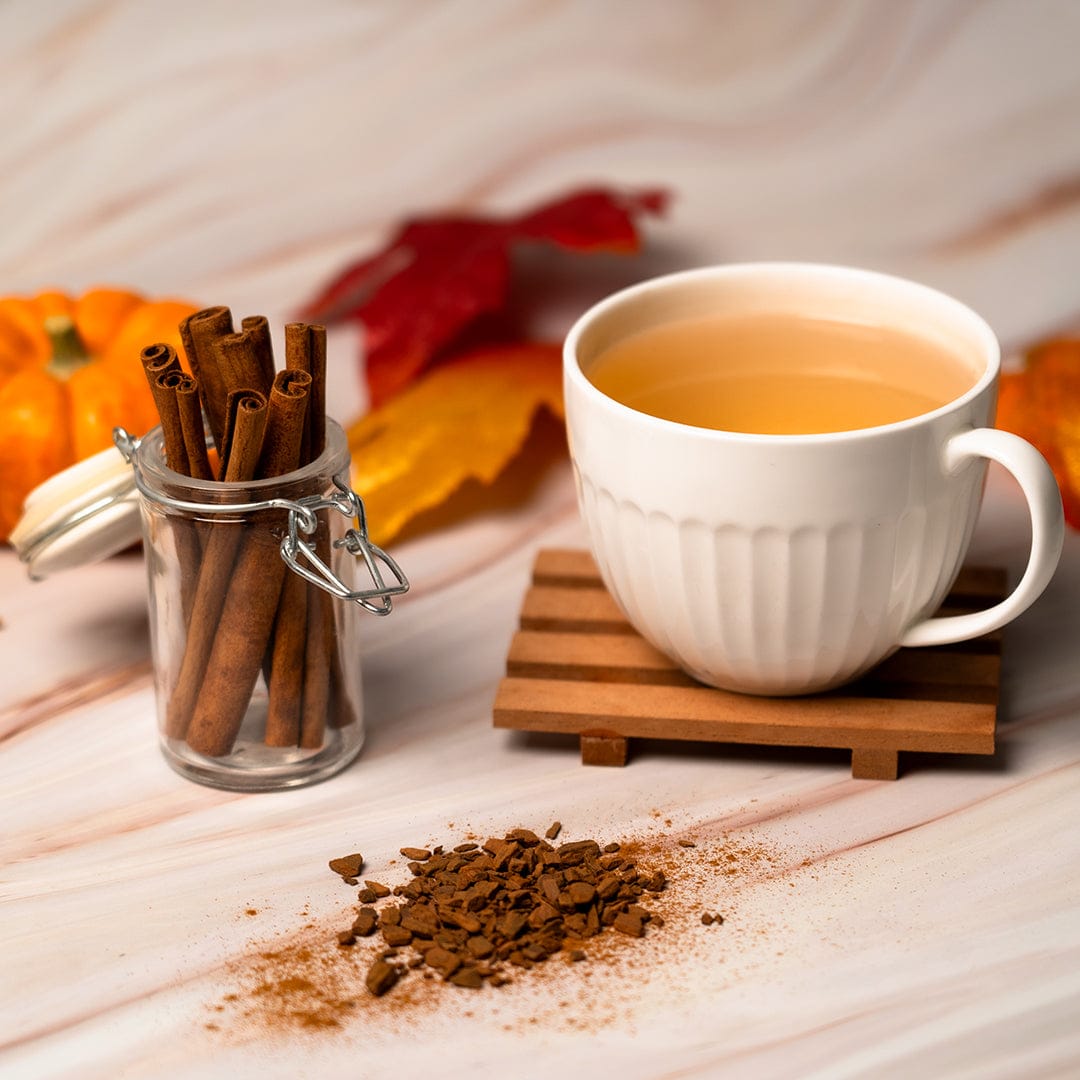
Image source: Full Leaf Tea Company (cinnamon tea brewing guide)
11
Logistics, Documentation and Supply Security
Reliable cassia programs are won in the warehouse, not just in the orchard. A mature Chinese supplier holds climate-controlled storage, keeps quills in clean woven bags on pallets, and coordinates consolidated containers out of Guangxi ports so that mixed spice orders ship as one lot.
Documentation is where B2B buyers separate professionals from brokers. Request, in writing: Certificate of Analysis per lot, botanical species confirmation, coumarin and cinnamaldehyde values, moisture and ash content, phytosanitary certificate, and food-grade or organic certification where your market demands it. If a supplier hesitates on any of these, that is the signal to keep looking.
Image source: Vecteezy (sacks stacked on pallets in a storage warehouse)
12
Why Buyers Choose spicesmfr
spicesmfr operates out of the Yulin Fuda spice cluster, which puts us inside the market where cassia, star anise, Sichuan pepper and dozens of other spices change hands daily. That location is not a slogan; it means we can inspect competing lots side by side, lock in origin-direct pricing, and consolidate your spice order into a single shipment with consistent documentation.
We ship whole quills, split bark, powder and cassia oil to food manufacturers, distributors and fragrance houses across North America, Europe, the Middle East and Southeast Asia. Every lot ships with its COA and species confirmation, and we will walk through coumarin levels, oil content and packaging before you commit a container. In my view, the spice trade still runs on relationships and paperwork done well; that is exactly the gap we fill.
Request a sample. Send your target spec for cassia quills, split or powder and we will reply with current pricing, a COA and export terms. Bulk orders from one ton to full containers, with mixed spice consolidation available from Yulin.


Leave a Comment